
 spacestrategies.org
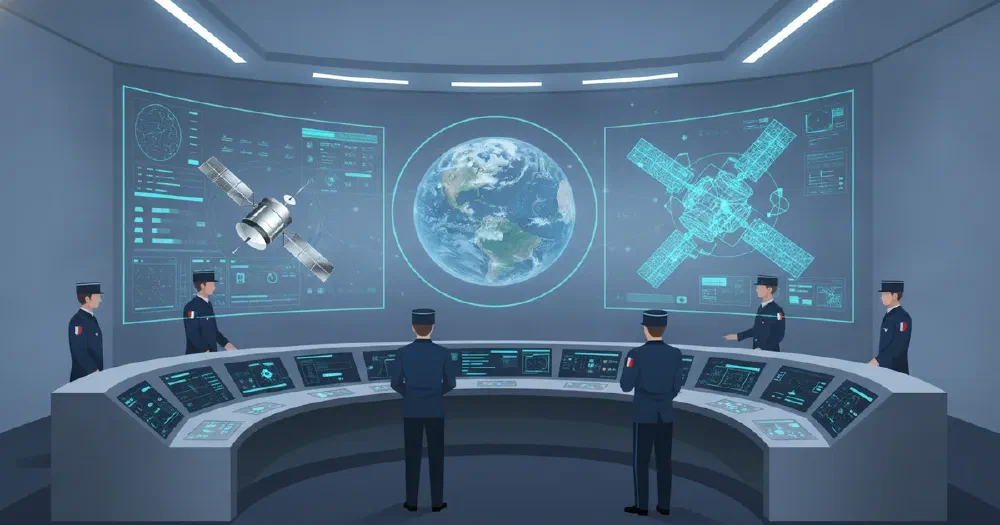
On 12 November 2025, President Emmanuel Macron stood at the newly inaugurated Commandement de l’Espace (CdE) in Toulouse and declared that “space is no longer a sanctuary, it has become a battlefield."Élysée, 12 November 2025 He announced €4.2 billion in additional military-space spending through 2030, lifting France’s total planned envelope to roughly €10.2 billion , built around two demonstrator satellite clusters: TOUTATIS in low Earth orbit, arriving as soon as 2027, and Yoda/PALADIN/ÉGIDE in geostationary orbit, targeted for 2030.
France’s seriousness about active orbital defense is not the open question; it has held that course since 2019. The real question is whether this posture actually narrows the risk it was built to close — adversary rendezvous-and-proximity operations, non-kinetic jamming, and the erosion of French strategic autonomy — or whether the declaration itself now outpaces the hardware, leaving France more exposed in the interval than its own rhetoric admits.
The answer holds across every angle examined here, and is worth stating before the evidence that supports it: the risk that matters most is not any single adversary action, but a compounding structural condition in which France’s own delivery schedule, its data dependency, and the ambiguity of its own defensive technology combine to widen the exposure window the strategy was created to close. TOUTATIS has cleared a genuine milestone — a simulated in-orbit laser-dazzle demonstration, reported by a single medium-reliability outlet — narrowing the gap between declaration and capability in low orbit.Daily Galaxy, October 2025 Yoda, the higher-value geostationary demonstrator, has not: it still depends on a firm geostationary-transfer launch slot that General Philippe Adam, commander of the Air and Space Force, described as unresolved in 2024European Spaceflight, 2024 — a bottleneck compounding a separate maiden-flight risk carried by TOUTATIS’s own MaiaSpace launcher.
Parliament confirms the scale of the exposure. France’s National Assembly Defense Commission acknowledges, in its report on military dependencies, that the limitations of France’s sovereign small-debris sensors create a structural dependency on US space catalogs — one its own forthcoming satellite demonstrators will not resolve in the near term.
Key Judgments
-
The highest-scored risk in this assessment is a data-sovereignty problem, not a hardware-delivery problem. French and EU early-warning capability depends on US debris-tracking infrastructure for most small-object data — a condition that persists regardless of whether TOUTATIS or Yoda fly on schedule, and that undercuts the strategic-autonomy case the 2025 strategy is built on.
-
Demonstrated capability is concentrated in low orbit; the declared priority, geostationary deterrence, is the least mature. TOUTATIS’s Splinter/Lisa-1 pairing has already run a simulated laser-dazzle test; Yoda’s GEO equivalent remains launcher-dependent, already delayed more than three years past its original schedule.
-
France’s own action-satellite architecture and the adversary threat it is built to counter are, technically, the same design. A rendezvous-capable “spotter” paired with a maneuverable “action” satellite is indistinguishable in signature from the ambiguous proximity approach France itself has accused Russia of conducting — a mechanism that generates its own reputational and escalatory exposure.
-
Every load-bearing delivery assumption behind the 2027 and 2030 targets carries independent schedule risk, and those risks are correlated, not merely additive. MaiaSpace’s maiden flight, a firm Ariane-class GEO transfer slot, and a single-source commercial orbital tug all have to succeed roughly on time; a credible alternative reading is that the strategy’s near-term function is more declaratory than operational.
-
France’s 2022 kinetic anti-satellite moratorium governs only the destructive pathway; the non-destructive rendezvous pathway TOUTATIS itself embodies remains essentially ungoverned — a policy gap more consequential now that the capability nears operational status than it was when it was purely declaratory.
-
Institutional maturity has consistently outpaced fielded hardware. The Command reached initial operational capability and built its command-and-control architecture years ahead of any operational demonstrator satellite reaching orbit — a sequencing choice that is organizationally sound but creates a visible perception gap in the interim.
-
Europe’s industrial fragmentation limits France’s ability to build the sovereign redundancy its own strategy calls for. Declining European cooperative defense spending and a heavy non-EU sourcing share mean the “European constabulary” framing implicit in the 2025 speech is aspirational as much as descriptive, and France’s national increase does not by itself resolve it.
Sources and evidence strength for every figure above: see the Key Figures table at the end.
Sixteen Threats, Five That Matter
The Command was created in 2019 in direct response to a documented incident: the 2018 approach of the Russian satellite Loutch-Olymp toward the Franco-Italian Athena-Fidus communications satellite, close enough that then-Defense Minister Florence Parly publicly accused Russia of attempting signal interception.Futura-Sciences
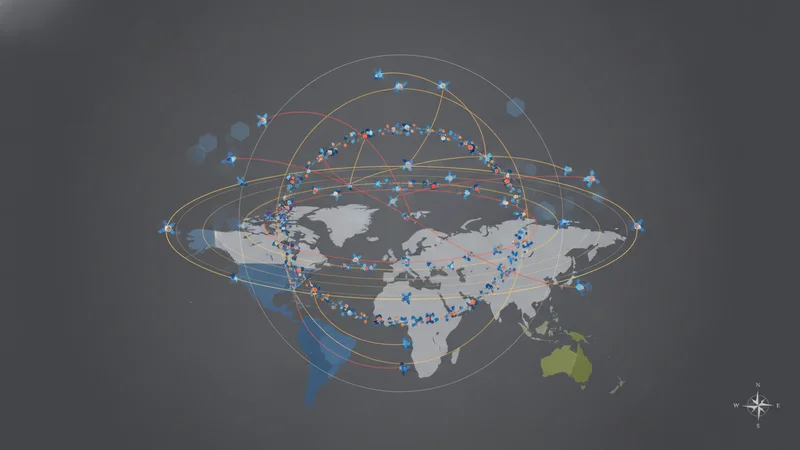
Sixteen threats identified across this assessment sort into four categories — adversary counterspace action, launch and industrial dependency, European fragmentation, and escalatory risk generated by France’s own posture — eleven of which score in the high-to-critical range. The dominant pattern is non-kinetic and already active, not kinetic and hypothetical: the 2025 assessment from the Center for Strategic and International Studies finds continuation, not escalation, of jamming and advanced maneuvering over the past yearCSIS Aerospace Security Project, April 2025 — continuation of exactly the behavior the Command exists to counter, which is itself the baseline threat, not a reassurance. Kinetic risk scores lower on likelihood but remains catastrophic in impact, a category France’s co-sponsorship of the 2022 moratorium against destructive anti-satellite testing is partly designed to keep rare.
Five risks warrant sustained attention beyond their raw score, each carrying a distinct mitigation logic:
- Sovereign early-warning dependency — the single highest-scored risk in the entire assessment. Roughly 90 percent of the small-debris data underpinning EU-wide early warning still originates in the United States , a present-tense condition unrelated to any programme’s hardware fate. The clearest mitigation is to fund France’s existing sovereign sensor-fusion effort explicitly as a data-sovereignty programme with a measurable reduction target, rather than treating it as a secondary support function for the demonstrator satellites.
- Adversary rendezvous approach against French assets. The 2018 precedent is confirmed, and General Adam’s 2024 acknowledgment of “unidentified” Russian and Chinese maneuvers near French assets shows this is recurring rather than a one-off. TOUTATIS’s own interdiction satellite will not be operational before 2027 at the earliest, meaning France’s detection capability, genuinely strong, currently outpaces its response capability by a wide margin.
- The Ariane/GEO launch-slot bottleneck. This risk has already materialized, per General Adam’s own on-record comments and Parliament’s confirmation of a delay exceeding three years. Ariane 6’s operational return eases the near-term picture, but no alternate heavy-lift slot for Yoda is documented as secured.
- Dual-use ambiguity of France’s own action-satellite design. Domestic critics already characterize the programme as offensive surveillance,Révolution Permanente and no transparency or pre-notification mechanism for rendezvous activity currently exists. A voluntary notification norm, bilateral with Germany or multilateral through the EU, would reduce misperception risk without requiring either side to disclose capability details.
- Electronic-warfare jamming of French and allied assets — a near-certain, already-occurring condition, with no fielded French or allied counter-jamming programme beyond a nascent Franco-German early-warning initiative.
What’s Fragile, What’s Strong
The vulnerabilities line up around dependency, not any specific technical weakness: an unproven MaiaSpace launcher, single-vendor reliance on Exotrail’s orbital tug and Infinite Orbits’ PALADIN platform, and institutional capacity that has grown years ahead of the hardware it is meant to command. None of these is fixable by policy announcement alone; each requires multi-year industrial investment.
Resilience is genuinely uneven. Detection-side resilience is strong — France’s layered ground-sensor network (the Graves radar, ArianeGroup’s Helix telescopes, Aldoria, Look Up Space) shows no comparable gap in this record. Response-side resilience is far thinner: the demonstrated laser-dazzle capability covers only the low-orbit segment, and multi-year funding continuity, while real, does not resolve a launcher-manifest bottleneck. France’s debris-mitigation regime is robust for the scope it actually covers — safety and disposal compliance — but does not extend to the payload-integration layer where the real dual-use ambiguity sits.
Two Kill Chains, Nearly a Mirror Image
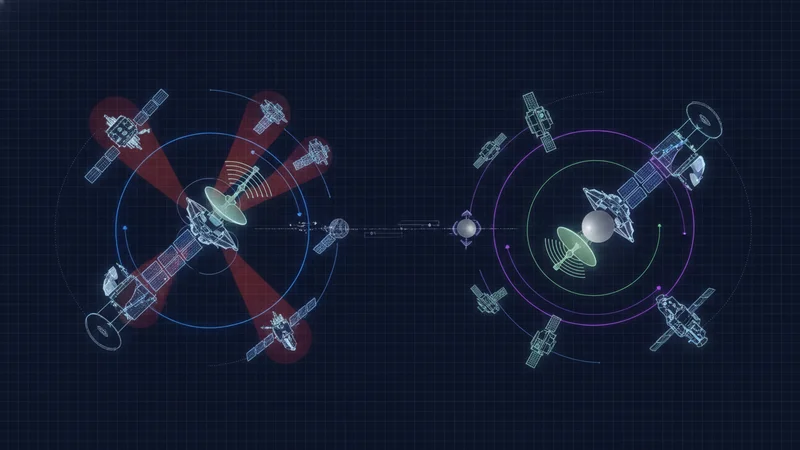
Mapping TOUTATIS’s own detect-approach-neutralize sequence — Lisa-1’s detection, Splinter maneuvering into co-orbital proximity aboard the still-unflown MaiaSpace vehicle , then a non-destructive dazzle effect — against the adversary sequence it is built to counter shows the two chains are harder to distinguish from each other than the programme’s framing suggests.
TOUTATIS’s own highest-leverage disruption point sits at reconnaissance, not the effector stage, since intent becomes nearly impossible to determine once co-orbital proximity is reached — early detection matters more than a capable late-stage effector. The same launcher fragility already flagged structurally sits directly in Splinter’s own delivery phase: the weaponization-to-delivery link in France’s own chain is currently unbuilt hardware, not merely an undemonstrated capability. Conversely, the adversary chain against French assets has a long, detectable approach phase that gives France’s ground-sensor network a wide window — but this record documents no corresponding French interdiction capability fielded during that window, since TOUTATIS is not yet operational. The near-mirror-image structure of the two chains is not incidental. It is built into the architecture itself.
Stress-Testing the Strategy
Four assumptions carry the weight of the strategy’s credibility, and all four are load-bearing and fragile. That TOUTATIS and Yoda deliver on schedule is fragile because every prior French space-defense demonstrator examined in this record has slipped years past its original target. That MaiaSpace’s maiden flight succeeds on schedule is equally fragile, since new launch vehicles routinely slip and no track record yet exists. That the €10.2 billion increase converts into fielded capability rather than further institutional expansion is fragile at a lower level, since institutional buildout has consistently outpaced hardware throughout this record. And that institutional maturity substitutes for actual hardware readiness as an interim deterrent is fragile for a specific reason: deterrence requires an adversary’s belief in fielded capability, not merely evidence of organizational readiness.
The cheapest course of action open to an adversary is simply to wait: France’s own historical delay pattern does the adversary’s work for it. A second, similarly low-cost option is patience of a different kind — continuing low-intensity, ambiguous proximity activity precisely during the window when France has announced intent but fields no interdiction capability, testing French detection and political response without crossing the threshold that would trigger France’s own retained retaliatory-rights clause. A third, competitive rather than hostile course would see Germany’s larger and unreconciled financial commitment used to position Berlin as Europe’s lead military-space power, diluting France’s claimed distinctiveness.
The stress test surfaces, without foreclosing, an alternative hypothesis: that France’s posture functions primarily as declaratory deterrence — a costly signal of intent whose principal near-term value is diplomatic and agenda-setting within Europe rather than operational, consistent with two decades of doctrinal continuity that has repeatedly outpaced delivered hardware.
The Dual-Use Problem
The Splinter/Lisa-1 architecture is a textbook case of dual-use conversion. Autonomous rendezvous with an uncooperative, tumbling object is the identical core capability whether the end use is active debris removal or counterspace action. France’s own space agency identified this exact technical challenge as unsolved for civilian debris removal in a 2013 assessment ; Splinter now addresses it operationally, in a military context, more than a decade later. The same underlying computer-vision and pose-estimation techniques are maturing in open academic literature independent of France entirely, meaning motivation diversity — not French intent specifically — is what actually drives the wider proliferation risk.
Modification complexity from a pure inspection platform to an “action” satellite is low to moderate: the hardest engineering problem, autonomous approach to an uncooperative object, is common to both the civilian and military missions. France’s regulatory apparatus is comprehensive for debris and safety compliance but was never designed to, and does not, constrain the payload-integration step that converts an inspection platform into a counterspace-capable one.
Three scenarios frame where this settles. An effective-control outcome would see an EU or NATO-level rendezvous transparency norm emerge, building on the EU’s own 2023 acknowledgment of the dual-use character of its space-security strategy . A managed-diffusion outcome, closest to the status quo, would see capability development continue under a patchwork of national safety rules with no capability-specific arms-control instrument. An uncontrolled-proliferation outcome would see commercial rendezvous suppliers serve multiple state customers absent export discipline on autonomy software or payload integration, eroding France’s first-mover position.

Why the Four Lenses Agree
A structured threat inventory, a kill-chain mapping, an adversarial stress test, and a dual-use analysis share almost no assumptions with one another, which is exactly why their convergence matters. All four independently arrive at the same diagnosis: structural dependency, not any single adversary’s intent, is the dominant risk. The threat inventory places the single highest score on sovereign data dependency, untouched by any hardware programme’s fate. The kill-chain mapping reaches the same place by showing detection-side resilience is strong while exploitation-side capability remains unbuilt, tracing back to the identical launcher fragility. The red-team reading shows the delivery assumptions are correlated through a shared premise rather than independent. The dual-use analysis confirms it from a fourth angle: France’s own debris-mitigation regime, genuinely robust for its intended scope, was never built to reach the layer where the actual proliferation risk sits.
The lenses agree just as firmly that the ambiguity in France’s own posture is a structural feature, not a side effect — the kill-chain mapping, the dual-use pathway, and the incentive structure the red-team reading surfaces all confirm this independently. Where they stop agreeing is on whether France’s posture is primarily operational or primarily declaratory, a question this record does not resolve: the hedged sourcing behind the TOUTATIS laser-dazzle claim and the still-unclarified origin of Splinter’s own payload leave that reading open.
Strategic Implications
For French decisionmakers, the highest-leverage near-term move is an independent, quantified schedule-risk audit of the correlated MaiaSpace–TOUTATIS–Yoda–Exotrail dependency chain, treated as a single correlated risk rather than four separate programme risks. Alongside it: a bilateral rendezvous pre-notification dialogue with Germany, and accelerated sovereign sensor-fusion investment with a measurable target for reducing reliance on US debris-tracking data. Over the medium term, extending the 2022 moratorium’s normative logic to non-destructive rendezvous transparency would let France help shape, rather than merely be scrutinized under, an emerging governance regime, while diversifying beyond single-source commercial suppliers would reduce both industrial and exportable-capability risk.
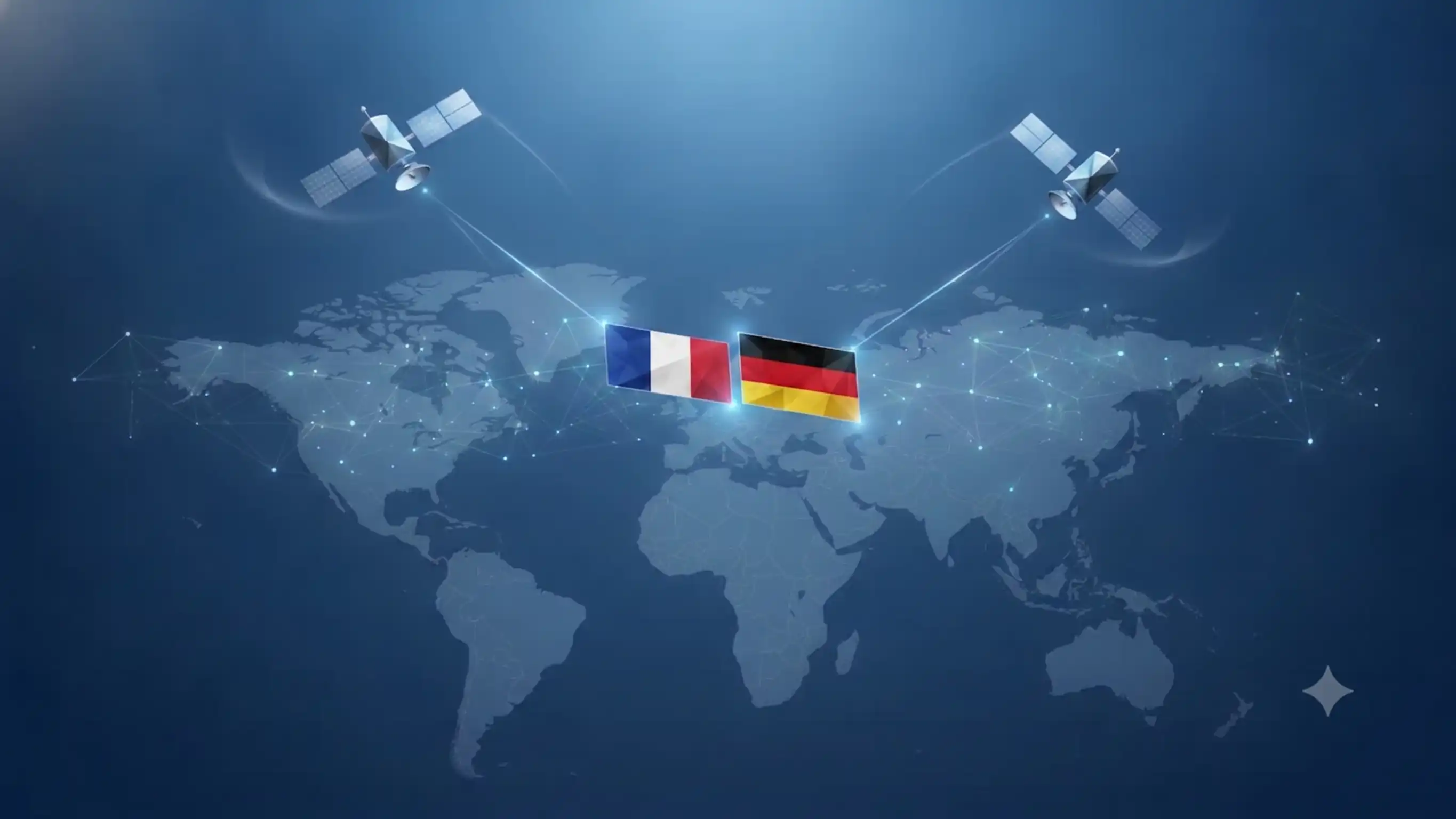
For allies, particularly Germany and the wider European Union, the diagnosis reframes France’s data-sovereignty gap as a shared European problem, since any EU-wide early-warning architecture inherits the identical US dependency. The more consequential open question is whether Germany’s larger financial commitment channels toward genuine capability-sharing, which would ease France’s launch and vendor bottlenecks, or toward parallel, uncoordinated national capacity, which would deepen European fragmentation.
For multilateral and normative bodies, the exportable lesson is that France’s binding commitment, the 2022 kinetic moratorium, is strong precisely where it applies and silent precisely where the emerging risk actually sits, non-destructive rendezvous. Extending that same logic to rendezvous transparency would close a governance gap current instruments do not reach.
Worth monitoring over the next two years: the outcome of MaiaSpace’s maiden flight; whether Franco-German cooperation produces shared infrastructure or parallel capacity; any confirmed cyber incident against the Command’s ground segment or a confirmed kinetic anti-satellite test by any peer state, either of which would immediately re-rank the lower-scoring threats identified here; and whether any public account clarifies the actual origin of TOUTATIS’s laser payload beyond the single hedged source this assessment currently relies on.
Key Figures — Sources & Evidence
“Single source” below means the figure rests on one outlet or document not independently corroborated elsewhere in the research corpus — a directional data point, not a settled fact.
| Figure | Value | Source | Evidence |
|---|---|---|---|
| Military space budget increase | €4.2bn increase (2026-2030); ~€10.2bn total planned envelope | Breaking Defense | Corroborated (3 independent trade outlets) |
| Small-debris data dependency on the US | ~90% of the small-debris data underpinning EU-wide early warning | AeroTime | Corroborated (official parliamentary report) |
| Yoda program schedule slip | Delayed more than 3 years past original target | Assemblée Nationale | Corroborated (parliamentary source) |
| TOUTATIS low-Earth-orbit deployment target | 2027 | Zone Militaire/opex360 | Corroborated |
| TOUTATIS in-orbit laser-dazzle demonstration | Simulated dazzle test reported as already conducted | Daily Galaxy | Single source (medium-reliability outlet) |
| Yoda GEO transfer launch-slot status | Unresolved as of General Adam’s 2024 statement | European Spaceflight | Corroborated (on-record senior officer) |
Primary Sources & Research
Élysée (2025). Inauguration du Commandement de l’Espace à Toulouse. Présidence de la République. https://www.elysee.fr/emmanuel-macron/2025/11/12/inauguration-du-commandement-de-lespace-a-toulouse
Assemblée Nationale (2026). Rapport d’information sur les dépendances militaires de la France vis-à-vis de l’étranger (Cormier-Bouligeon / Saintoul, n° 2617). Commission de la défense nationale et des forces armées. https://www.assemblee-nationale.fr/dyn/17/rapports/cion_def/l17b2617_rapport-information
Bonnal, C., Ruault, J.-M. & Desjean, M.-C. / CNES (2013). Active Debris Removal: Current Status of Activities in CNES. 6th European Conference on Space Debris (ESA SP-723). https://conference.sdo.esoc.esa.int/proceedings/sdc6/paper/198/SDC6-paper198.pdf
CSIS Aerospace Security Project (2025). Space Threat Assessment 2025. CSIS. https://www.csis.org/analysis/space-threat-assessment-2025
Young, M. / CSIS Aerospace Security Project (2024). The Evolution of French Space Security. CSIS. http://aerospace.csis.org/wp-content/uploads/2024/04/240314_Young_French_Space.pdf
Secure World Foundation (n.d.). RPO Activities: How They Can Be Both the Cause of and Solution to Instability in Space. Secure World Foundation. https://www.swfound.org/publications-and-reports/rpo-activities-how-they-can-be-both-the-cause-of-and-solution-to-instability-in-space
SIPRI (2023). EU Space Strategy for Security and Defence: Towards Strategic Autonomy. SIPRI. https://www.sipri.org/publications/2023/eu-non-proliferation-and-disarmament-papers/eu-space-strategy-security-and-defence-towards-strategic-autonomy
Candan, B., Oktay, T. & Servadio, S. (2025). Adaptive Relative Pose Estimation Framework with Dual Noise Tuning for Safe Approaching Maneuvers. arXiv. https://arxiv.org/abs/2507.16214