
 spacestrategies.org

Key Findings
- NASA fixes International Space Station end-of-life at 2030 ; a Senate bill (March 2026) would extend it to 2032 , barring deorbit until at least one commercial station is crew-ready.
- The earliest Western successor, Axiom’s free-flyer, is targeted for 2028, but reaches crewed operational capability only around 2030–2031; the baseline gap is 0–18 months of degraded, not absent, capability.
- Two high-confidence sources flatly contradict each other on demand: NASA testifies markets “have not materialized,” while industry cites Starlab’s fully booked racks and over $2B raised; $850M in fresh capital flowed in 2026 alone.
- The FY2026 request cuts ISS operations and crew/cargo transport roughly 25% ; the financing bridge is being hollowed before any gap opens, and provider survival hinges on firm government commitment.
- Any interruption to the Western occupied streak mechanically transfers the “longest continuously crewed station” title to China’s Tiangong , crewed for some four years.
Executive Summary
This analysis maps how the handover from the ISS to commercial low Earth orbit (LEO) platforms could unfold between 2028 and 2035, and traces who bears the cost if continuous Western crewed capability lapses. Two uncertainties dominate everything else: whether a crew-ready Western platform exists when the ISS leaves service, and whether a genuine non-government LEO market materialises, or demand stays thin and sovereign-anchored. Government demand is the only customer present in every future. That makes early, firm public commitment the single strategy that pays off no matter how the other uncertainties break.
The Forces at Play
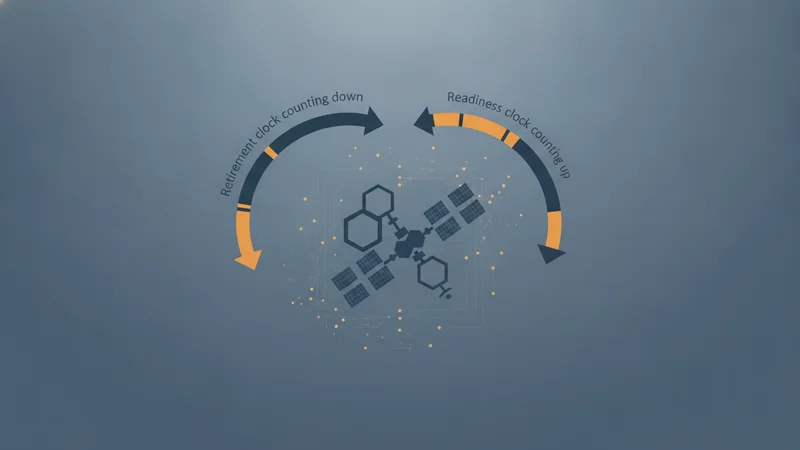
The post-ISS transition is a race between two clocks running at different, uncertain speeds: a retirement clock counting down to deorbit, and a readiness clock counting up to the first crewed commercial station. Where those clocks cross determines whether the West keeps a foothold in orbit or cedes it.
Context and Focal Question
NASA built the entire Commercial LEO Destinations programme around a single stated purpose : to prevent a crew-capable gap as the ISS reaches its 2030 operational end-of-life. The focal question for the decade follows directly. From 2028 to 2035, will the West sustain continuous crewed LEO capability across the handover — and who pays if it does not?
The stakes fall unevenly. NASA owns the timeline and the acquisition levers. A cluster of US providers — Axiom, Vast, Blue Origin and Sierra Space’s Orbital Reef, and the Northrop Grumman–backed Starlab — are racing certification gates, with at least four credible architectures advancing through real hardware milestones. The ISS international partners — ESA, JAXA, CSA, ASI — are exposed asymmetrically. European astronauts run European hardware aboard the station today. Japanese cargo and Canadian robotics remain integral to its logistics. Yet none has a guaranteed successor in a US-provider-centric architecture. Rounding out the field: the ISS National Lab’s microgravity users, the US Congress, insurers, and China — whose Tiangong is both comparator and potential windfall beneficiary.
The Driving Forces
Three clusters of forces shape the outcome. The first is schedule, against a hard deadline. NASA’s Commercial LEO Destinations program manager, Angela Hart, has conceded on the record that a gap may occur , and that commercial capability on day one could be degraded. Even Vast , the most aggressive entrant, slipped Haven-1 by about nine months after qualification-article testing . The gap is, in effect, a residual: the distance between when the ISS leaves orbit and when a commercial platform is genuinely crew-ready. Project the providers’ slipping schedules onto the fixed deorbit date and that distance is what remains. Under baseline assumptions it is small — perhaps zero to eighteen months — and degraded rather than empty, cushioned by NASA’s quiet decision to accept thirty-day crewed increments in place of continuous presence. Axiom’s response to the clock is telling. It re-sequenced assembly to launch its power-and-thermal module first , so the station can free-fly as early as 2028, explicitly to deconflict from the US Deorbit Vehicle and keep the ISS retirable no earlier than 2030.
The second cluster is demand, and here the signals are bimodal rather than merely noisy — the signature of a true uncertainty, not a data gap. On one side, NASA has evidence that the anticipated markets in launch, tourism and mass-produced research never materialised. Roger Handberg, a space-policy expert at the University of Central Florida, argues that no space-made product yet justifies its operating cost . Vast itself models close to zero commercial revenue over five years, with governments the dominant early customer. On the other, the Commercial Space Federation points to Starlab’s fully booked racks, more than $2B raised on NASA’s original plan, and microgravity-grown semiconductor crystals with twice the performance and ten times the yield, valued above $1M per kilogram . Both readings hold at once if demand is real but niche — high value, low volume. The question is then whether a niche can scale, not whether it exists.
The third cluster is money and political will. The FY2026 request would cut ISS operations to roughly $920M and crew/cargo transport to $1.21B — about a quarter off each. At the same time, a shift to funded Space Act Agreements pushes development cost onto the providers. Where commercial crew was roughly 90% government-funded, they now expect to carry most of the bill themselves, which means they need firm government commitment before they can raise capital. The binding bottleneck for a clean handover is not hardware. It is a financing gate in 2026–27: if firm commitment slips, financing slips, and every downstream milestone slips with it. One danger sign ties the threads together: sovereign demand, the trend that provider survival depends on most, is already declining before any gap has opened, even as CLD (Commercial Low Earth Orbit Development) is folded organisationally into a directorate that must also fund a Moon base.
Choosing the Axes
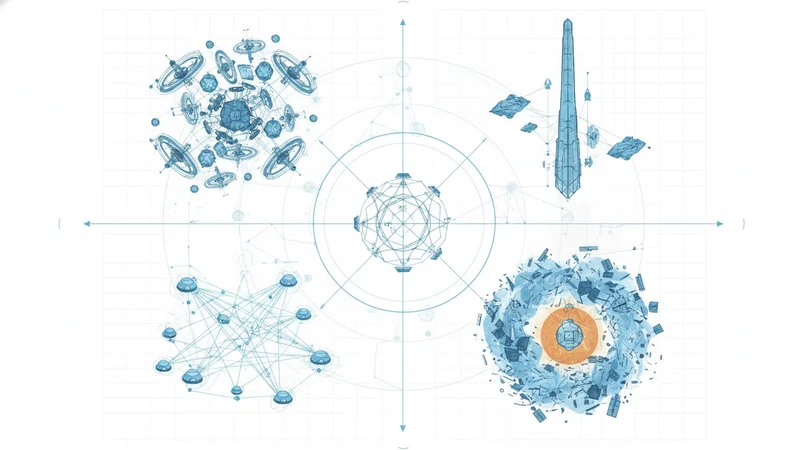
Two critical uncertainties branch the futures. Axis 1, the schedule gap: is a continuously crewed Western platform in service when the ISS leaves, or does an interval open with no continuous presence? Axis 2, demand: does a real, multi-customer market emerge, or does demand stay thin and government-anchored?
Other candidates were considered and set aside. Appropriations and political will matter enormously, but they correlate too closely with both axes — strong funding accelerates schedule and underwrites demand — so they are modelled as the dominant force moving positions along both axes, not as a separate dimension. Market structure (consolidation versus fragmentation) is a downstream result of demand crossed with funding, not a driver. The Tiangong windfall follows almost mechanically once a gap opens, so it is kept as a stake and a wildcard rather than an axis. And the 2030-versus-2032 deorbit date folds into Axis 1, because the legislative backstop is the mechanism that turns a gap into a clean handover.
The two axes are largely independent. Engineering readiness is governed by hardware qualification and launch availability; demand, by the microgravity value proposition and sovereign budgets. The record bears this out: capital kept flowing to the leading free-flyers at the very moment Joel Montalbano, NASA’s acting associate administrator for space operations, testified that demand had not materialised — the two moving in opposite directions at once. A partial coupling runs through appropriations, which makes the two mixed futures — gap-with-demand, and handover-without-demand — slightly less likely, but none of the four is incoherent.
Scenario Matrix
| Schedule: GAP OPENS | Schedule: CLEAN HANDOVER | |
|---|---|---|
| Demand: REAL | C: Stranded Demand | D: Commercial LEO Takes Off |
| Demand: THIN | A: The Cliff | B: Sovereign Outpost |
Axis 1: Schedule/readiness gap (Gap opens → Clean handover) · Axis 2: Commercial demand (Thin → Real)
The Scenarios
These four futures are not forecasts but plausible, internally coherent worlds. The crossing of the two clocks defines each quadrant, independent of optimism or pessimism. Each has its own opportunities, its own losers, and its own seeds of instability.
Scenario A: The Cliff
In this world, the ISS deorbits around 2030 into a vacuum. Several failures compound. Operations cuts of about 25% hollow out the bridge, while the cost-share shift starves the under-capitalised providers. Capital dries up as the demand skeptics are proven right. Schedules slip, Vast-style. And the 2032 backstop never passes — or is overtaken when cracks in Zvezda’s transfer tunnel, which NASA rates high-consequence and high-likelihood , force an early closure no policy or schedule could have prevented.
Industry reframes what follows not as a “gap” but as a “cliff”: a multi-year interval with no continuously crewed Western station. The loss is permanent: workforce and suppliers disperse, and they do not return. The supply chain is what makes it irreversible. Once the specialised vendors and crews that sustain a crewed station disperse, they do not come back cheaply. The bridge was already fraying before the end: cumulative shortfalls were trimming ISS cargo flights, and NASA was weighing a cut to US-segment crew from four to three. National Lab science is stranded. Long-lead, flight-specific payloads — the BECCAL cold-atom physics lab , bioprinting work, the in-space additive manufacturing whose defect prediction was validated aboard the station — lose their host. Because they were meant to migrate through the ISS by in-place rack transfer, a gap does not merely pause this science; it strands it.
The winners are few and stark. China, as Tiangong becomes the only continuously crewed station and inherits the prestige — “Beijing will be very happy,” as Mike Gold, Redwire’s president of civil and international space, put it . And the substitute providers — CubeSat hosting, parabolic flights — that salvage the sliver of science compatible with twenty-second microgravity windows. The losers: the international partners with no autonomous access, the National Lab user base, and NASA’s own standing. Yet the scenario carries its own contradiction. Even those who built the programme dispute its severity: Phil McAlister, a former NASA Commercial LEO Destinations director, calls a gap survivable , citing the shuttle-to-commercial-crew precedent. NASA’s own drift toward thirty-day increments quietly institutionalises a tolerance for discontinuity. The value evidence itself — semiconductors above $1M per kilogram — implies some demand that a total-collapse story must explain away. For the transition, the Cliff is the outright failure of the gap-avoidance rationale, and the full realisation of asymmetric partner exposure.
Scenario B: Sovereign Outpost
Here continuous capability survives — Axiom’s 2028 free-flight bridges the deorbit, the 2032 backstop insures it — but thin commercial demand consolidates the field to a single, government-anchored survivor. The demand skeptics are right. Vast’s near-zero-revenue model generalises. And Axiom’s interim CEO, Kam Ghaffarian, is proven right that the market cannot support more than one station — a judgement he voiced as his own company struggled to raise capital. Weaker providers fold, echoing Bigelow Aerospace’s 2020 collapse after two decades and three flown prototypes (one still docked to the ISS), or they merge, as Northrop Grumman did into Starlab . A hardening insurance market — pulling back from high-risk LEO zones and excluding debris damage — squeezes the smaller operators hardest and drives the same consolidation independently of demand.
The result is one continuously crewed Western station, sustained almost entirely by NASA and sovereign customers — ESA and JAXA buying access. Capability survives; competition does not. The station looks more like a government facility with a commercial operator than a thriving marketplace. The best-capitalised survivor wins a utility-style monopoly. NASA avoids the gap. Partners who locked in bilateral access early are protected. The losers: the multi-provider vision, the investors in the also-rans, and the “NASA as one customer among many” model — which collapses back to NASA as the only customer.
The tension is sharp. A single sovereign-dependent station re-creates the appropriations fragility the commercial transition was meant to escape. “Continuous capability” without a continuous heartbeat may hold technically while feeling like a downgrade. The baseline trajectory lands here: continuous but consolidated. Reaching the richer, multi-provider future would require an acceleration the default path does not supply. For the transition, partner access now runs through bilateral deals with the lone survivor, handing it monopoly bargaining power. The gap-avoidance goal succeeds even as the competitive-market premise fails.
Scenario C: Stranded Demand
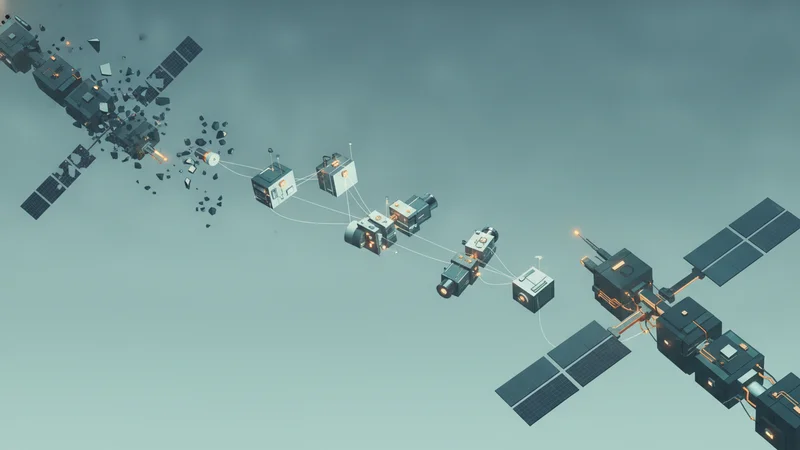
This is the cruel-irony world. A real multi-customer market materialises — booked racks, more than $2B raised, value above $1M per kilogram — but no crew-ready Western platform exists at deorbit. The Commercial Space Federation turns out to be right: demand was always there, and the binding constraint was NASA’s unreliability, not weak markets. Yet the gap opens anyway — through schedule risk, a Zvezda-forced early closure, or a failed backstop — and the capital that kept flowing (the $350M Axiom and $500M Vast rounds of early 2026) cannot buy back lost time.
Customers are queued and funded while the Western platform sits unready. Uncrewed free-flyers and Tiangong absorb what they can. High-value pharma and semiconductor work migrates to whatever host is available — potentially including Chinese infrastructure. Long-duration disciplines such as cold-atom physics simply pause instead: their flight-specific hardware cannot easily re-host on an undefined module. China captures both the orphaned high-value demand and the prestige windfall. Agile uncrewed-platform operators take the rest. The losers: the US providers who missed the window, the National Lab, the partners, and a US industrial base that proves a market existed but could not serve it.
The deep tension is that this world is unstable by construction. Strong demand should, over time, pull Western supply back online — so the scenario tends to resolve toward D if the West recovers, or toward A if it does not. It is the least self-consistent quadrant and the most strategically costly, because the West forfeits a market it created. Even the Chinese windfall is not guaranteed clean: Tiangong has taken debris hits, and a return-capsule impact once stranded its own crew — a reminder that the comparator is not gap-proof. For the transition, Stranded Demand confirms that the real risk is policy instability, not the market: the failure here is governmental, not commercial.
Scenario D: Commercial LEO Takes Off
In the optimistic future, a continuous handover and a genuine self-sustaining market arrive together. Axiom free-flies in 2028 and the backstop guarantees overlap. Demand thickens as microgravity manufacturing matures and the high-value proposition scales beyond a niche. The $850M raised in 2026 signals sustained capital. The June 2026 restoration of “NASA as one customer among many,” after the brief government-owned core-module detour was abandoned, holds. And architecture diversity across four-plus credible designs sustains two or three survivors — helped by falling launch and avionics costs and a maturing servicing-and-relay ecosystem that lowers the barrier to entry.
Several commercial stations operate. NASA is one paying customer among governments, pharma firms, materials companies and tourists. Partners buy access from multiple providers, restoring the bargaining power a monopoly would have stripped from them. The continuous heartbeat holds without controversy. The winners are broad: multiple US providers, a vindicated NASA model, international partners with real options, the microgravity user base, US industrial leadership. The losers: China’s relative prestige advantage, and the demand skeptics’ thesis.
Even this world is not frictionless. LEO congestion — more than 10,000 active satellites, most launched since 2019 , with Chinese analyses suggesting safe carrying capacity may already be exceeded — and a hardening insurance market that excludes debris damage remain live downside risks. Launch dependency means a Starship-class stand-down could still widen the gap for monolithic architectures. And a thriving market still rests partly on mass-production demand that remains unproven: the core demand conflict is not fully resolved even in the West’s favour. This future requires the acceleration trajectory, not the default: D is aspirational, not expected. For the transition, the asymmetric-exposure problem dissolves, and both of the programme’s goals succeed at once.
How Scenarios Shift
The matrix is dynamic, not static. The central oscillation runs between B and D, governed by demand once the gap is avoided. If pharma and materials cross the commercial-viability threshold and a second provider becomes self-funding, a Sovereign Outpost thickens into Takeoff. If demand stalls or a recession bites, insurability and funding pressure consolidate Takeoff back to a single survivor. Stranded Demand (C) cannot hold its position. Proven demand either pulls Western supply back online within a couple of years, lifting it to D. Or recovery fails: supplier erosion turns irreversible, and it drops to the Cliff. A Cliff, once fallen into, is the hardest to climb out of: only a crash-funded emergency reconstitution, after the political cost is felt, plausibly restores even a single sovereign station.
One lever moves futures along the schedule axis more than any other: the 2032 legislative backstop. Enacting it shifts any “gap-opens” world into the “clean-handover” column, turning a hard deadline into an elastic bridge when schedules slip. Pulling the other way, Zvezda’s structural risk is the one trigger that can open the gap involuntarily and early — bypassing every policy and schedule mitigation and forcing a gap regardless of intent. A Starship stand-down could widen the gap for the launch-dependent architectures. A major debris cascade would collapse insurability and push every operator toward consolidation. Conversely, a single scaled space-manufactured product — a semiconductor killer app — would settle the demand question and pull the whole field toward Takeoff. And a congressional cancellation of Commercial LEO Destinations (CLD) funding, beyond the FY2026 cuts already on the table, would force either the Cliff or a hard single-survivor outcome.
The Outlook
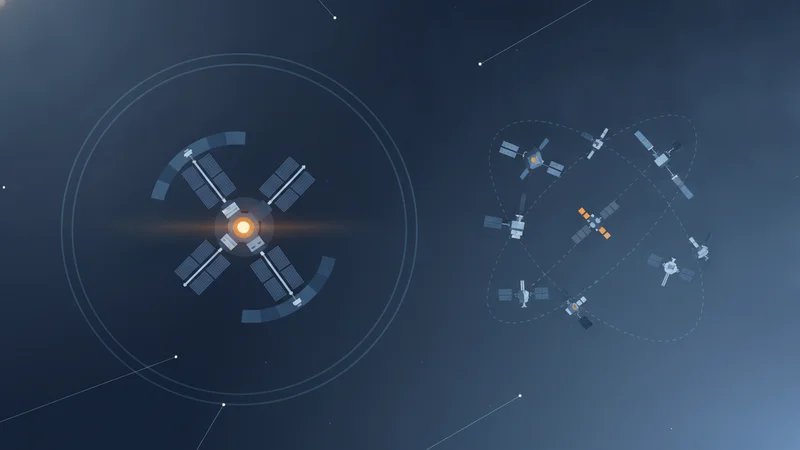
Across four very different worlds, a small set of moves pays off regardless of which one arrives. A handful of observable signals will reveal, early, which way the clocks are crossing.
What To Do Regardless
Four strategies are robust because no scenario makes them unnecessary.
First, decouple science continuity from any single platform. In every future, the long-lead, flight-specific payloads are the assets most exposed to discontinuity. Investing now in re-hostable, modular payload interfaces protects the user base whether the handover is clean or catastrophic. It is the one continuity item no scenario renders moot. And because the migration plan routes science through the ISS by in-place rack transfer, the disciplines that cannot tolerate a gap should be identified and pre-staged now.
Second, push the 2032 backstop to enactment as gap insurance. It is still a pending bill, not current law. It costs nothing in the clean-handover worlds, where it goes unused, and is decisive in the gap-opens worlds — the only lever that shifts the schedule outcome without betting on which provider succeeds.
Third, anchor sovereign demand contractually and early. Government demand is the only durable customer in every scenario. Converting Space Act Agreements into firm, multi-year service-purchase commitments at the 2026–27 financing gate does two things at once: it de-risks provider financing and underwrites the demand floor, directly answering the providers’ stated precondition for raising capital. This is the pipeline’s single point of failure: if firm commitment slips, financing slips, and every downstream milestone follows.
Fourth, secure partner access before consolidation. ESA, JAXA, CSA and ASI exposure is highest in the worst worlds. Bilateral access must be negotiated before any single survivor gains monopoly bargaining power, with an autonomous-capability hedge held in reserve against the Cliff and Stranded-Demand outcomes. The successors to Japanese cargo and Canadian robotics sit off the current US-centric critical path. That is why this exposure is structural, not incidental — and must be written in as an explicit requirement.
A handful of indicators will signal early which branch is opening. Axiom achieving free-flight on or before 2028 — tracked through NASA and Axiom milestone announcements — points toward a clean handover. Further provider slips beyond 2027, visible in trade-press trackers, point toward a gap. Reaffirmed “markets have not materialized” testimony, set against continued funding rounds above roughly $300M — read off congressional records and funding reports — will adjudicate the demand axis. Two more bear watching: FY2027 appropriations (a cut or a flat line points to funding-gated consolidation or the Cliff) and any escalation in Zvezda’s leak rate, the early involuntary trigger. Each branch then opens its own move: a Cliff makes partner-led autonomous capability essential; a Sovereign Outpost rewards first-mover lock-in; Stranded Demand favours agile uncrewed providers and a rapid-recovery crewed entrant; Takeoff scales a full servicing-and-logistics ecosystem.
Limitations
The 2028–2035 window is short enough that scheduled events — Axiom 2028, the 2030 deorbit, the 2032 bill — dominate, and dynamics beyond 2035 are only sketched. The largest data gap is the magnitude of demand. High-confidence sources flatly contradict each other, and no independent market-sizing exists, so the analysis carries the disagreement as a branching uncertainty rather than resolving it. The same applies to the parallel splits on gap severity and deorbit date. Provider readiness dates rest on company-stated targets with a demonstrated slip history; the China-continuity and orbital-congestion threads rest on medium-confidence think-tank and op-ed sources. Three assumptions are load-bearing: that the 2030 baseline holds absent the legislative override, that the FY2026 budget trajectory is indicative of later years, and that demand is best read as real-but-niche. Out of scope: detailed Wolf-Amendment legal mechanics, tourism-demand modelling, and non-US, non-China sovereign entrants. Finally, the two axes are substantially but not perfectly independent: the appropriations coupling makes the two mixed worlds, Sovereign Outpost and Stranded Demand, modestly less probable, and makes Stranded Demand inherently transitional.
Primary Sources & Research
NASA (n.d.). Commercial Space Stations. NASA. https://www.nasa.gov/humans-in-space/commercial-space/commercial-space-stations/
NASA (n.d.). NASA’s Low Earth Orbit Microgravity Strategy. NASA. https://www.nasa.gov/leomicrogravitystrategy/
NASA (2026). NASA Seeks Industry Input on Next Phase of Commercial Space Stations. NASA. https://www.nasa.gov/humans-in-space/commercial-space/leo-economy/nasa-seeks-industry-input-on-next-phase-of-commercial-space-stations/
NASA (2026). NASA, Axiom Space Change Assembly Order of Commercial Space Station. NASA. https://www.nasa.gov/humans-in-space/commercial-space/leo-economy/nasa-axiom-space-change-assembly-order-of-commercial-space-station/
NASA (2026). NASA Sees Key Progress on Starlab Commercial Space Station. NASA. https://www.nasa.gov/humans-in-space/commercial-space/leo-economy/nasa-sees-key-progress-on-starlab-commercial-space-station/
NASA (2026). NASA Supports Burst Test for Orbital Reef Commercial Space Station. NASA. https://www.nasa.gov/humans-in-space/commercial-space/leo-economy/nasa-supports-burst-test-for-orbital-reef-commercial-space-station/
NASA (n.d.). NASA’s Commercial Partners Make Progress on Low Earth Orbit Projects. NASA. https://www.nasa.gov/general/nasas-commercial-partners-make-progress-on-low-earth-orbit-projects/
NASA (2026). NASA, Northrop Grumman to Send Medical, Technology Studies to Space. NASA. https://www.nasa.gov/missions/station/iss-research/nasa-northrop-grumman-to-send-medical-technology-studies-to-space/
NASA (2026). A Message From Administrator Jared Isaacman. NASA. https://www.nasa.gov/blogs/workforce-updates/2026/05/22/a-message-from-administrator-jared-isaacman/
NASA (2026). Getting SSPICY: NASA Funds Orbital Debris Inspection Mission. NASA. https://www.nasa.gov/centers-and-facilities/ames/getting-sspicy-nasa-funds-orbital-debris-inspection-mission/
NASA (n.d.). NASA’s Push Toward Commercial Space Communications Gains Momentum. NASA. https://www.nasa.gov/technology/space-comms/nasas-push-toward-commercial-space-communications-gains-momentum/
NASA (2026). Stem Cell Research for Cancer, Spacesuit Work Kick Off June. NASA. https://www.nasa.gov/blogs/spacestation/2026/06/01/stem-cell-research-for-cancer-spacesuit-work-kick-off-june/
NASA (2026). Dragon Returns to Earth, More Cargo Preps, Advanced Research Underway. NASA. https://www.nasa.gov/blogs/spacestation/2026/02/27/dragon-returns-to-earth-more-cargo-preps-advanced-research-underway/
East Asia Forum (2026). Starlink, China and the governance of low Earth orbit. East Asia Forum. https://eastasiaforum.org/2026/02/19/starlink-china-and-the-governance-of-low-earth-orbit/
Observer Research Foundation (2026). 2026, A Turning Point for The Indian Space Programme. ORF. https://www.orfonline.org/research/2026-a-turning-point-for-the-indian-space-programme
Observer Research Foundation (2025). Megaconstellations to Strain Bharatiya Antariksh Station Operations. ORF. https://www.orfonline.org/expert-speak/megaconstellations-to-strain-bharatiya-antariksh-station-operations
Ericson et al. (2026). Modeling the Thermal Behavior of Photopolymers for In-Space Fabrication. arXiv. http://arxiv.org/abs/2601.14897v1
Henderson et al. (2025). Comparison of laser system designs for quantum technologies: BECCAL flight system vs. BECCAL ground test bed. arXiv. http://arxiv.org/abs/2505.08680v1
Lokaveer et al. (2024). The SAP-1 Payload: A Technology Demonstration for Space-Based Microbiology Experiments. arXiv. http://arxiv.org/abs/2407.21183v2
Albee et al. (2026). Architecting Autonomy for Safe Microgravity Free-Flyer Inspection. arXiv. http://arxiv.org/abs/2603.14524v1