
 spacestrategies.org

An intergovernmental operator that quietly carries Europe’s weather, climate, and half of its Earth observation
A structural anatomy of EUMETSAT — read through its physical assets, institutional architecture, operative actors, and strategic purposes, each examined from fundamental substrates up to ecosystem-level dynamics — is the most economical way to understand both why it works and why its tensions are now sharpening.
Ask a European citizen which space organisation underwrites the forecast on their phone, the fire alert on their television, the ozone bulletin for their asthma app, and the sea-surface temperature record that anchors the continent’s climate policy, and the answer — if there is one — will almost always be wrong. It will be ESA, or the European Commission, or Copernicus as a vague synonym for “European space.” It will not be EUMETSAT. Yet by 2026 the European Organisation for the Exploitation of Meteorological Satellites, a Darmstadt-based intergovernmental body of thirty member states, operates Meteosat over Africa and the Indian Ocean, flies the MetOp polar series in concert with the US JPSS, has taken custody of Sentinel-3 and Sentinel-6 for Copernicus, is inheriting Sentinel-4, Sentinel-5, CO2M, CIMR and CRISTAL, and has just committed roughly €1 billion to EPS-Sterna, a twenty-satellite microwave constellation that represents its first serious step from flagship platforms to New Space architectures. The Copernicus operational portfolio routed through EUMETSAT has effectively doubled in a decade .
This makes EUMETSAT something unusual in the European space landscape: not an agency, not a procurement body, not a regulator, but an operator — the entity whose job is to turn space assets built by others into continuous, dependable, twenty-year data streams that feed numerical weather prediction, climate services, maritime safety, atmospheric monitoring and emergency response. It is the closest thing Europe has to an operational space utility. And precisely because it has been stable and technically competent for four decades, it has become invisible — a background infrastructure that only surfaces politically when it breaks, as it did in June 2024 when it moved the MTG-S1 geostationary sounder from Ariane 6 to Falcon 9 and found itself at the centre of a continental row over strategic autonomy . What follows is a structured dissection of EUMETSAT across its physical and technological base, its institutional and normative architecture, the actors who drive and constrain it, and the purposes — declared and revealed — that it serves.
What EUMETSAT is made of, and what it is for
EUMETSAT is an institution before it is a hardware inventory, and that shapes where the analytical weight falls. The physical base is real but instrumental — satellites and ground segments matter because they carry a mission, not as ends in themselves; the centre of gravity sits at the integrated fleet and the Darmstadt operations centre rather than at individual components.
The institutional architecture, by contrast, is dense from top to bottom: a 1983 intergovernmental convention at the base, mission-specific system designs in the middle, and a thick web of treaties, EU-interface arrangements, Copernicus entrustment contracts, and ITU allocations at the ecosystem layer. The operative actors concentrate around the Director-General, Council, staff and prime contractors for day-to-day management, and around member states, ESA as procurement agent, ECMWF as the assimilation partner, NOAA as polar twin, and the Commission as Copernicus principal at the wider layer. The purposes are where declared and revealed missions need to be held side by side: the founding mandate is meteorology, but the operational reality has silently expanded into climate, atmospheric composition, maritime, cryosphere and carbon monitoring.
Three tensions will emerge that no single-disciplinary reading catches cleanly: the mismatch between a formally meteorological mandate and a revealed Earth-system role; the structural separation between ESA-as-procurement-agent and EUMETSAT-as-operator, which is productive in normal times and brittle under stress; and the fact that EUMETSAT’s most important relationship is not with a hardware partner at all, but with ECMWF’s data assimilation — the binding constraint on the value of every byte it downlinks.
Assets & Technologies (Material Dimension)
EUMETSAT’s identity is not forged in the physical envelope but in how it turns other people’s hardware into twenty-year data streams. The component inventory is substantial even though the agency builds nothing itself, and its distribution already telegraphs an industrial base in the middle of being redrawn.
Foundational Layer
The non-negotiable physical substrates are geostationary slots over 0° and the Indian Ocean, sun-synchronous polar orbits for the MetOp and future EPS-SG families, the microwave and infrared atmospheric windows that allow sounding through cloud, and the space-weather and debris environment that increasingly conditions operations at 800 km. These constraints frame every design choice downstream, but they are shared with every meteorological operator on the planet and are not where EUMETSAT’s distinctiveness lies.
Subsystem Layer
The MetOp-Second Generation payload complement includes IASI-NG (financed by CNES), MetImage (financed by DLR), the Sentinel-5 UV/VIS/NIR/SWIR spectrometer (€234 million, funded by the European Commission through Copernicus) and the microwave suite that anchors polar sounding. Meteosat Third Generation carries the Flexible Combined Imager, the Lightning Imager declared operational on 31 October 2024 , and the Infrared Sounder — the first European hyperspectral GEO sounder, whose calibration-ringing behaviour requires novel response-function uniformisation developed with EUMETSAT staff co-authorship. The Sterna microsatellite is built on OHB Sweden’s InnoSat platform at 125 kg, carrying a nineteen-channel cross-track microwave radiometer from AAC Clyde Space with contributions from Omnisys and roughly thirty consortium firms. The inventory is worth enumerating because its distribution — Franco-German primes on MTG and MetOp-SG, Nordic primes on Sterna — itself reveals an industrial base that is in the middle of being redrawn.
System Layer
As an operational whole, EUMETSAT consists of its satellite fleets in flight, the Mission Control Centre in Darmstadt with its backup at Usingen, the EUMETCast dissemination system, the data processing chains, and the network of Satellite Application Facilities (SAFs) that extend production into federated products such as the LSA-SAF global LAI/FAPAR/FVC chain . The signal of the past eighteen months is traffic: MetOp-SGA1 on Ariane 6 in August 2025, MTG-S1 on Falcon 9 from Cape Canaveral on 1 July 2025 , MTG-I2 reassigned by extraordinary Council on 2 September 2025 to Ariane 62 for a 2026 Kourou launch . Each launch decision is simultaneously a technical fact, an institutional statement, and a political signal.
Supersystem Layer
EUMETSAT participates in two overlapping multi-platform networks. The first is the global meteorological architecture coordinated through WMO : a geostationary ring in which Meteosat sits alongside GOES-East, GOES-West, Himawari, FY-4 and the Russian Elektro, and a polar constellation in which MetOp is the morning-orbit twin of the NOAA JPSS afternoon orbit. The second is Copernicus — no longer a peripheral commitment but, after the Sentinel-3/4/5/6 and CO2M/CIMR/CRISTAL entrustments, the body of operational infrastructure that now nearly equals EUMETSAT’s own programmes in scope. The Sterna demonstrator AWS has already fed data into ECMWF operational forecasts , signalling integration at the level of the assimilation cycle rather than merely at the level of data delivery.
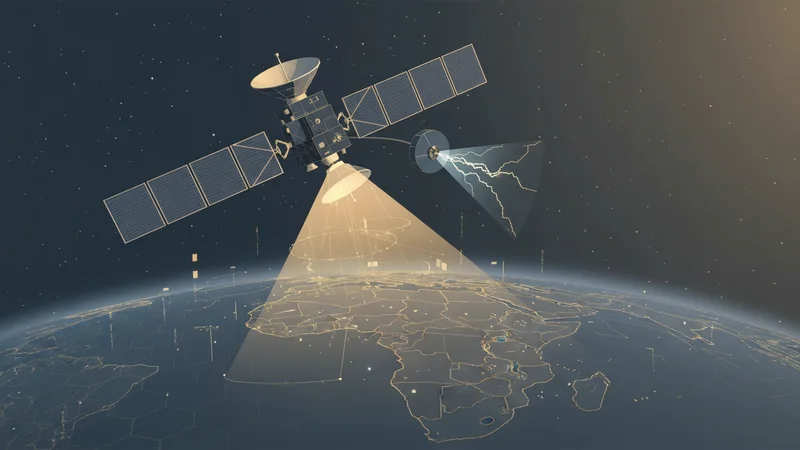
Architecture & Frameworks (Formal Dimension)
EUMETSAT exists by virtue of the convention entered into force on 19 June 1986 that established it as an intergovernmental organisation independent of EU institutional architecture. That constitutive fact — a treaty rather than a regulation, governance by subscription rather than by qualified majority — shapes everything downstream.
Foundational Layer
The membership (thirty states in September 2025, including the United Kingdom, Switzerland, Norway, Türkiye and Iceland) is deliberately broader than either ESA or the EU. This makes EUMETSAT politically anomalous: its constitutive law is a treaty, not a regulation or a directive, and the principle that governance proceeds by member-state subscription rather than by qualified majority is not a procedural detail but a constitutional fact that shapes everything downstream.
Subsystem Layer
At the level of specifications, standards, interface control documents and software libraries, EUMETSAT’s footprint is concentrated in calibration chains, data format standards (inherited from and feeding back into WMO and CEOS practice), ground-segment software, and the product-generation pipelines in which the agency has genuine algorithmic authorship. The IASI and future IASI-NG datasets serve as the European reference for machine-learning cloud detection , which makes the associated specifications, validation protocols, and algorithmic reference implementations load-bearing well beyond EUMETSAT’s perimeter. The real-time rescheduling algorithms for Sentinel-6 POSEIDON-4 , the MTG-S IRS response-function uniformisation, and the LSA-SAF product chains all belong to this layer of codified operational knowledge.
System Layer
Mission architectures are co-defined with ESA during development and frozen at handover; systems engineering, project governance and operational procedures then migrate to Darmstadt for the twenty-plus-year exploitation phase. The MetOp-SG governance illustrates the pattern: ESA as procurement agent under an Airbus Defence and Space prime contract originally signed in 2014 for €1.4 billion, a programme whose full lifetime cost (satellites plus operations, six spacecraft, twenty-year horizon) is now quoted by Director-General Phil Evans at €5.2 billion in 2025 economic conditions, while ESA Earth Observation director Simonetta Cheli cites €2.8 billion for the six satellites alone. The figures are reconcilable — different scopes, not different realities — but the need to reconcile them publicly reveals a governance pattern in which EUMETSAT funds operations and recurrence while ESA carries development.
Supersystem Layer
EUMETSAT has working arrangements with ESA (the procurement-agent relationship), with the European Commission (the Copernicus entrustment contracts that now underpin Sentinel-3, Sentinel-6, Sentinel-4, Sentinel-5, CO2M, CIMR and CRISTAL), with NOAA (the Joint Polar System that provides the MetOp/JPSS morning/afternoon split), with WMO, with ECMWF, and with national meteorological services. ITU allocations for the relevant downlink and sounding bands belong here as well, as does the ~90% subscription threshold that governs programme approval — a rule that turned out to be the binding constraint for Sterna when France, Greece, Hungary and Lithuania had not subscribed by the September 2025 deadline, pushing approval from a de-facto July 2025 outcome to a November Council and ratification on 12 January 2026 by 29 of 30 states . The Draghi Report of September 2024 , with its EU-centric framing of European space, is the political backdrop against which the entire ecosystem-level architecture is now being re-contested.
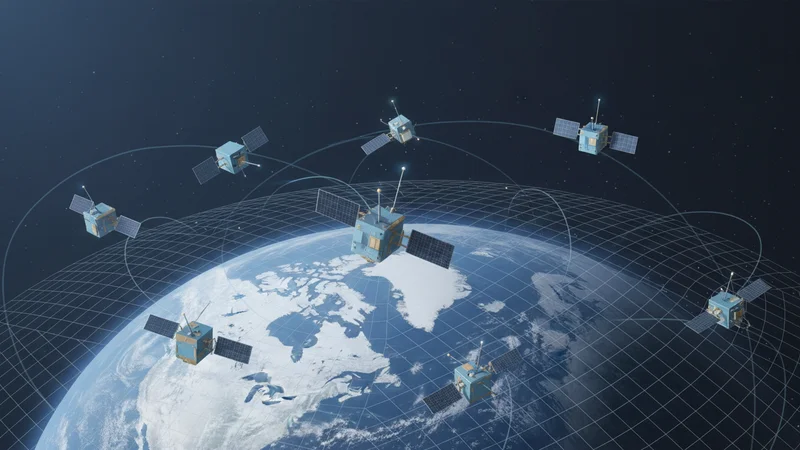
Operators & Stakeholders (Efficient Dimension)
The operative actors cluster around two axes — a legacy Franco-German primes ecosystem and an emergent Nordic one — while member-state delegations, ESA, the Commission and ECMWF crowd the wider ecosystem. EUMETSAT’s political vulnerability is concentrated precisely where its room for manoeuvre is measured by how far external criticism can reach.
Foundational Layer
The foundation builders visible to EUMETSAT are WMO at the global meteorological level, CEOS for satellite Earth observation coordination, ITU for spectrum, and the national meteorological services and universities that reproduce the atmospheric science workforce. This is a thin but not negligible layer: the operational legitimacy of a meteorological satellite operator rests on standards bodies and training institutions that no single member state could replace.
Subsystem Layer
The people and organisations that build EUMETSAT’s hardware cluster into two overlapping primes ecosystems. The legacy axis is Franco-German: Airbus Defence and Space in Toulouse and Friedrichshafen for MetOp-SG and MTG; Thales Alenia Space on associated payloads; CNES and DLR as national technical sponsors for IASI-NG and MetImage respectively. The emergent axis is Nordic: OHB Sweden as Sterna prime on a €248 million contract signed on 18 March 2026 — described by OHB as the largest satellite contract in Sweden’s space history — AAC Clyde Space for the radiometers, Omnisys, and a consortium of roughly thirty firms. Marco Fuchs’s framing of the Sterna award as evidence that “we can do New Space” is a sociological claim about EUMETSAT’s supply chain as much as a technical one.
System Layer
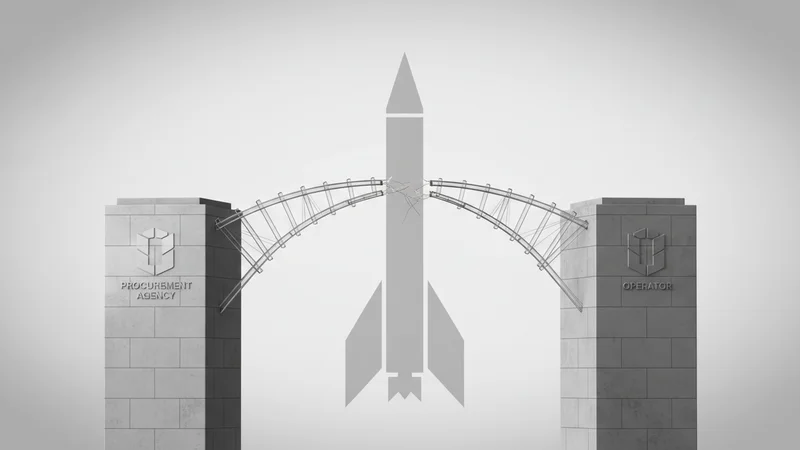
The operative actors are the EUMETSAT Director-General (Phil Evans), the Council of member-state delegations that met in extraordinary session on 2 September 2025 to reassign MTG-I2, the Darmstadt staff that carry mission operations, and the industrial primes during the development phase. Crucially, ESA acts here as procurement agent: even Sterna, the most structurally novel programme in a generation, routes its procurement through ESA while EUMETSAT runs the ground segment, launches, operations and data. This division of labour is not a minor administrative convenience; it is the structural feature that allows EUMETSAT to avoid building internal prime-contracting capacity, and it is the feature that reproduces EUMETSAT’s dependence on ESA’s industrial policy decade after decade.
Supersystem Layer
The ecosystem coordinators form the layer in which EUMETSAT’s political vulnerability is concentrated. Member-state delegations act in two capacities at once — as subscribers to EUMETSAT programmes and as participants in ESA Ministerials and EU Council formations — so that the same national budget cycle can stall a Sterna approval and reshape an ESA procurement in the same week. The European Commission has become a de-facto principal through Copernicus entrustments, even though EUMETSAT is not formally an EU body. ECMWF, under incoming Director-General Florian Pappenberger from 1 January 2026 (succeeding Florence Rabier) , is the indispensable assimilation partner whose 2025–2034 strategy explicitly emphasises EUMETSAT/ESA collaboration and AIFS operationalisation . NOAA is the polar twin, whose JPSS stability Evans had to seek public reassurance on in mid-2025 after political uncertainty in Washington. MEPs such as Christophe Grudler of the ITRE committee, who wrote to all thirty delegations on 4 July 2024 demanding reversal of the MTG-S1/Falcon 9 decision, and CNES president Philippe Baptiste, whose “naivety” intervention on LinkedIn the same week set the rhetorical temperature of the autonomy debate , are also ecosystem actors — not because they govern EUMETSAT directly, but because the institution’s room for manoeuvre is measured by how far their criticism can reach before it ties the Council’s hands.
Mission & Purposes (Final Dimension)
The declared mandate is meteorology in support of member-state weather services. The revealed purpose has silently become Earth-system monitoring — and the two no longer sit in the same political space.
Foundational Layer
At the commons level, EUMETSAT serves purposes that no single state can claim as its own: the continuous, calibrated observation of the Earth-atmosphere-ocean system that underwrites weather services as a public good, the global climate record as a civilisational asset, the peaceful use of the meteorological bands, and the equitable distribution of forecasts through WMO. These are the purposes that justify the intergovernmental form itself — they are the reasons a thirty-state convention is the appropriate vehicle rather than a single-state agency or a commercial operator.
Subsystem Layer
At the level of functional performance objectives, the requirements are ordinary but exacting: calibration stability across decades, data integrity, product latency, continuity between generations so that climate records are not broken by instrument changes, and the environmental compliance expected of any publicly funded space operator. This is where the Infrared Sounder calibration-ringing problem becomes mission-relevant rather than a signal-processing curiosity — because a discontinuity in IRS radiance records would propagate into climate data records and undermine the public-good purpose the instrument exists to serve.
System Layer
The operational capabilities EUMETSAT actually delivers today are wider than the 1983 convention anticipated. Nowcasting from MTG FCI’s ten-minute full-disk cadence now supports sub-kilometre, two-minute wildfire dynamics that have been validated against EFFIS on the 2024–2025 southern European fire seasons with burn-area deviations below twenty percent . MetOp-class polar data contributes 24% of UK Met Office forecast accuracy according to chief of science Simon Brown, with NOAA polar data contributing an additional 19% — a convergent 19-to-20× return ratio of socio-economic savings to investment cost. The Copernicus entrusted portfolio adds operational atmospheric composition monitoring (Sentinel-4 on MTG-S, Sentinel-5 on MetOp-SG), ocean and ice monitoring (Sentinel-3, Sentinel-6, CRISTAL), and CO2 and microwave imaging capabilities (CO2M, CIMR) that place EUMETSAT at the operational centre of Europe’s Earth-system monitoring. Sterna itself projects roughly €30 billion in lifetime economic value on a €1 billion programme — an operator’s estimate, but one aligned with the order-of-magnitude returns recorded for the existing polar fleet.
Supersystem Layer
At civilisational level, EUMETSAT’s declared and revealed purposes need to be read side by side. The declared purpose, inherited from 1983, is meteorology in support of member-state weather services. The revealed purpose — visible in the Copernicus entrustments, in the climate data record role, in the CO2M commitment, and in the operational atmospheric missions — is that EUMETSAT is now the de-facto operator of Europe’s Earth-system observing infrastructure and a central node in the continent’s climate policy apparatus. Carnegie Europe’s November 2025 analysis of EU climate leadership under pressure — a 2040 target weakened by up to five percent of international credits, a 66.25 to 72.5 percent emissions-cut range — describes exactly the political environment in which EUMETSAT’s climate mandate is expanding while the political climate ambition it was meant to serve is wavering.
Integration: emergent properties
Read dimension by dimension, EUMETSAT looks like a well-behaved operational agency. Read across all sixteen cells simultaneously, three emergent properties appear that no single dimension would surface on its own.
The first is a mandate-reality gap at the Final/Supersystem cell that the Formal/Foundational layer was never designed to absorb. EUMETSAT’s convention constitutes it as a meteorological operator; its operational portfolio in 2026 is an Earth-system and climate monitoring portfolio. The gap is not ideological drift — it is the cumulative result of Copernicus entrustment decisions taken in a different formal forum (the EU) than the one that governs EUMETSAT’s own programmes (its Council). The two forums have different membership (thirty states versus twenty-seven), different decision rules (subscription threshold versus qualified majority), and different political principals. The Formal/Foundational layer has not been rewritten; the Final/Supersystem layer has moved underneath it. That is a structural tension, not a management problem, and it is the kind of finding the matrix exists to make visible.
The second is a productive separation that is brittle under stress: the ESA-as-procurement-agent / EUMETSAT-as-operator pattern, which sits jointly at the Efficient/System cell. In normal times this separation is unambiguously productive. ESA carries development risk and concentrates engineering authority during the build phase; EUMETSAT inherits a qualified system and focuses on two-decade exploitation. The June 2024 MTG-S1 decision exposed the fracture lines. When the Ariane 6 inaugural slipped close to an MTG-S1 launch window, EUMETSAT — as operator — made an operator’s decision to switch to Falcon 9 to protect a service continuity obligation. The European autonomy community read this as an industrial-policy decision, which it was not empowered to be, and CNES’s Baptiste, Grudler in the ITRE, and the Commission’s Draghi-aligned EU-autonomy framing converged to reframe it as such. The visible course-correction on MTG-I2 in September 2025 shows how the mismatch gets absorbed: by discretion, in Council, under public pressure — not by any explicit rule in the convention. The separation continues to work, but it now has a political friction coefficient that did not exist before 2024.
The third emergent property is a hidden binding constraint at the Efficient/Supersystem cell: ECMWF’s assimilation system. EUMETSAT’s satellite data, however well calibrated and however voluminous, are operationally inert until they enter the assimilation cycle at Reading. The binding constraint on numerical weather prediction value is not observation volume but assimilation scaling and model error ; AI-NWP approaches such as AIFS and ClimaX, far from displacing the satellite operator, appear to increase rather than decrease the marginal value of high-quality anchoring observations, because their weaker error growth makes assimilation anchors more, not less, decisive . This means the single most important partnership in EUMETSAT’s network is not with ESA or the Commission or NOAA but with ECMWF — a fact that is invisible at the level of physical assets or institutional architecture and only emerges when the ecosystem of operative actors is read against operational capabilities. The Sterna AWS demonstrator being folded into ECMWF’s operational forecasts before the main constellation has even been built is the clearest possible signal of which relationship is actually load-bearing.
Taken together, these three properties describe an institution whose constitutive architecture is now carrying a strategic load it was not designed for, held in place by a partnership its own governance documents barely mention.
A 1983 meteorological convention and an ESA-operator separation are now bearing the weight of Earth-system monitoring in a contested EU autonomy environment, with ECMWF’s assimilation system as the hidden keystone. That is why EUMETSAT works, and why it has become politically visible at precisely the moment when its constitutive architecture is being asked to do more than its drafters ever imagined. The anatomy does not predict where the tension will resolve. It does make clear that the resolution will not happen inside any single analytical compartment — which is, in the end, the point of reading the whole structure at once.
Primary Sources & Research
EUMETSAT (2025). EUMETSAT expands its contribution to Copernicus through five new satellite missions. Copernicus Observer. https://copernicus.eu/en/news/news/observer-eumetsat-expands-its-contribution-copernicus-through-five-new-satellite-missions
EUMETSAT (2025). Meteosat Third Generation Imager-2 to be launched on Arianespace Ariane 62 rocket. EUMETSAT. https://www.eumetsat.int/meteosat-third-generation-imager-2-be-launched-arianespace-ariane-62-rocket
EUMETSAT (2024). First dissemination of operational data from Meteosat Third Generation. EUMETSAT. https://www.eumetsat.int/first-dissemination-operational-data-meteosat-third-generation
World Meteorological Organization (2025). Europe’s first geostationary sounder satellite has launched. WMO. https://wmo.int/media/news/europes-first-geostationary-sounder-satellite-has-launched
ECMWF (2025). Next Director-General of ECMWF will drive innovation and collaboration. ECMWF. https://ecmwf.int/en/about/media-centre/news/2025/next-director-general-ecmwf-will-drive-innovation-and-collaboration
ECMWF (2025). New 10-year ECMWF strategy emphasises collaboration and machine learning. ECMWF. https://ecmwf.int/en/about/media-centre/news/2025/new-10-year-ecmwf-strategy-emphasises-collaboration-and-machine
Spaceflight Now (2025). Live coverage: EUMETSAT, ESA to launch combo MTG-S1 / Sentinel-4 satellite on Falcon 9. Spaceflight Now. https://spaceflightnow.com/2025/07/01/live-coverage-eumetsat-esa-to-launch-combo-mtg-s1-sentinel-4-satellite-on-spacex-falcon-9-rocket-from-nasas-kennedy-space-center/
SpaceNews (2026). OHB Sweden wins €248 million contract to build EPS-Sterna constellation. SpaceNews. https://spacenews.com/ohb-sweden-wins-e248-million-contract-to-build-eps-sterna-constellation/
European Spaceflight (2026). ESA awards OHB a €248 million contract to build weather satellite constellation. European Spaceflight. https://europeanspaceflight.com/esa-awards-ohb-a-e248-million-contract-to-build-weather-satellite-constellation/
Defence-Industry.eu (2026). OHB wins €248 million contract to build Arctic weather satellite constellation for EUMETSAT programme. Defence-Industry.eu. https://defence-industry.eu/ohb-wins-e248-million-contract-to-build-arctic-weather-satellite-constellation-for-eumetsat-programme/
Space Intel Report (2026). This time it’s final: EUMETSAT commits to €1 billion EPS-Sterna constellation. Space Intel Report. https://www.spaceintelreport.com/this-time-its-final-eumetsat-commits-to-1-billion-eps-sterna-constellation-to-study-atmospheric-temperature-humidity/
ESPI (2024). The Draghi Report and European space. European Space Policy Institute. https://www.espi.eu/perspectives/draghi-report/
Observer Research Foundation (2025). Space geopolitics: Europe’s call for autonomy. ORF. https://www.orfonline.org/expert-speak/space-geopolitics-europe-s-call-for-autonomy
Carnegie Europe (2025). Taking the pulse: Has Europe given up its leadership on climate change?. Carnegie Endowment for International Peace. https://carnegieendowment.org/europe/strategic-europe/2025/11/taking-the-pulse-has-europe-given-up-its-leadership-on-climate-change?center=europe&lang=en
Dussarrat, P. et al. (2022). Response function uniformisation for the MTG Infrared Sounder. arXiv. http://arxiv.org/abs/2202.10149v2
Paugam, R. et al. (2025). Sub-kilometre wildfire dynamics from MTG FCI validated against EFFIS. arXiv. http://arxiv.org/abs/2510.26677v1
Bonavita, M. (2021). On some limitations of current machine learning weather prediction skill. arXiv. http://arxiv.org/abs/2105.09776v1
Kotsuki, S. et al. (2024). Error growth characteristics of AI-based numerical weather prediction. arXiv. http://arxiv.org/abs/2407.17781v4
García-Haro, F. J. et al. (2020). LSA-SAF global LAI/FAPAR/FVC operational chain. arXiv. http://arxiv.org/abs/2012.05367v1
Pergoli, A. et al. (2023). Real-time rescheduling algorithms for Sentinel-6 POSEIDON-4. arXiv. http://arxiv.org/abs/2302.02359v1