
 spacestrategies.org

Key Findings
- China contributes the most capable sensors and the largest satellite fleet among BRICS members, with China and India together operating approximately 1,000 of the bloc’s roughly 1,200 satellites – yet India blocks Chinese satellite services domestically and reserves its most advanced capabilities for US partnership.
- A decade after its 2015 launch, the constellation has produced no shared processing infrastructure, no common data format, and no binding institutional framework; data exchange remains bilateral, sporadic, and diplomatically mediated.
- The own-territory data restriction enshrined in the 2021 agreement reduces the constellation to parallel national programmes, preventing collective monitoring capability.
- All five supply-side conditions that international relations theory identifies as prerequisites for institutional cooperation – shadow of the future, small group size, equitable benefit distribution, existing institutional infrastructure, and leadership willingness – are unfavourable or negative.
- ESA’s Copernicus programme provides free, open, standardised global Earth observation data that outperforms the BRICS offering on every operational dimension, and BRICS members can freely access it.
Executive Summary
This assessment examines whether the BRICS Virtual Constellation for Earth observation – launched in 2015 to pool member states’ satellite data – represents a credible pathway to reducing Southern-hemisphere dependency on Western data sources, or whether it substitutes one form of dependency with another while delivering negligible operational capability. The analysis applies classical geopolitical frameworks alongside institutional, constructivist, and economic statecraft lenses to evaluate the initiative’s structural viability. The central finding is that China-India strategic rivalry sets an insurmountable ceiling on data sharing and institutional trust, while the constellation’s non-binding architecture – designed to protect sovereignty – ensures its persistence as a political symbol precisely because it fails as a technical programme.
The Terrain
The BRICS Virtual Constellation promises a Southern-hemisphere alternative to Western Earth observation dominance. But the gap between its geographic potential and its institutional reality reveals a coalition whose members agree on what they oppose – Western data hegemony – while disagreeing fundamentally on what they would build in its place.
Context and Strategic Question
In 2015, the space agencies of Brazil, Russia, India, China, and South Africa agreed to create a virtual constellation pooling their Earth observation satellites into a shared data resource. The stated ambition was clear: reduce the Global South’s dependency on Western data providers, principally ESA’s Copernicus and the NASA/USGS Landsat programmes. A decade later, the initiative has expanded its membership to include Egypt, Ethiopia, Iran, Saudi Arabia, and the UAE, each bringing political complexity but minimal space capability. The strategic question is whether this constellation can deliver on its founding promise – or whether it restructures dependency from Western providers toward Beijing while delivering less than what is already available for free.
The stakeholders are the BRICS member space agencies (CNSA, ISRO, Roscosmos, INPE/AEB, SANSA, and newer members’ nascent agencies), Western Earth observation providers whose market position the constellation nominally challenges, and the broader community of states evaluating whether BRICS offers a genuine alternative data architecture.
The Geographic Foundations
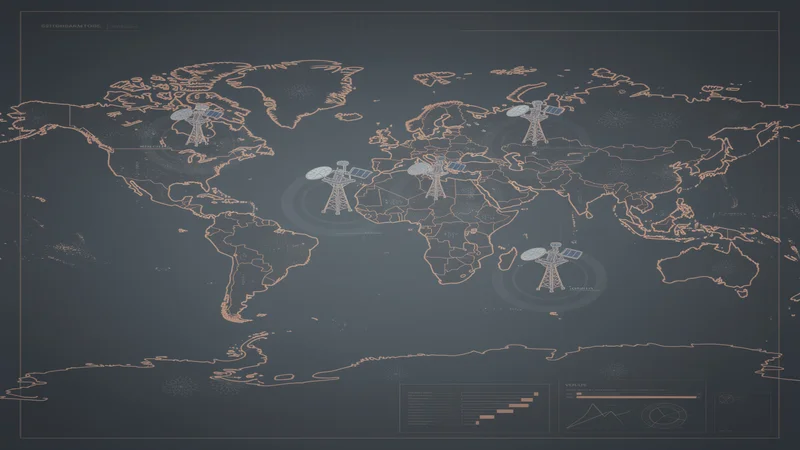
The constellation’s ground stations span five continents: Cuiaba in central Brazil, the Moscow region, Shadnagar-Hyderabad in southern India, Sanya on China’s Hainan Island, and Hartebeesthoek in South Africa. On a map, this distribution suggests near-global download coverage – a latent asset that, if fully integrated, would rival Copernicus in geographic reach.
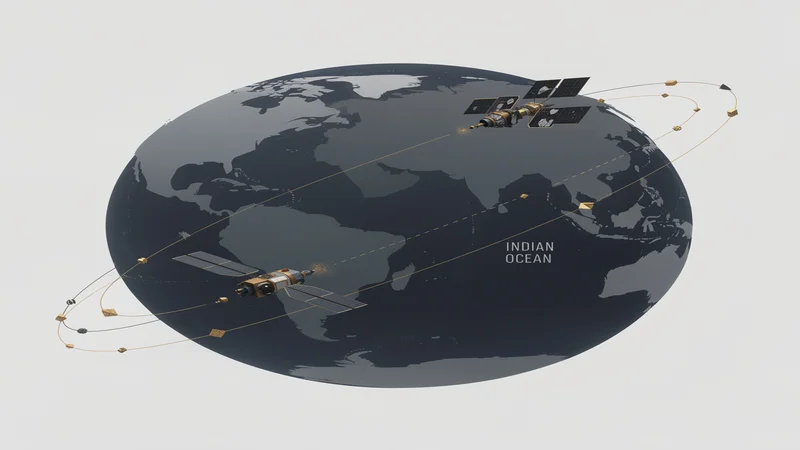
The reality is different. Each station operates as a sovereign island: nationally funded, nationally controlled, with no shared processing pipeline or common data backhaul connecting them. Contributing satellites fly sun-synchronous and near-polar orbits with sensors of vastly different resolution, spectral bands, and revisit rates. The physical geography of the member states – from Brazil’s equatorial Amazon basin to Russia’s Arctic territories to China’s mid-latitude agricultural zones – creates monitoring requirements so diverse they resist standardisation into any single architecture. Unlike Copernicus, which serves a geographically contiguous European user community, the BRICS constellation must serve radically different needs with no geographic coherence, no shared operational theatre, and no automated data exchange.
The single most important geographic asset is the ground-station spread itself. The single most important vulnerability is that no infrastructure connects those stations into a functioning network.
Strategic Position Summary
| Lens | Position | Assessment | Key Insight |
|---|---|---|---|
| Mackinder (Heartland) | Cross-zonal coalition spanning Heartland, Rimland, and Outer Crescent | Geographically unprecedented but strategically incoherent | The Heartland contributor (Russia) provides the weakest sensors, inverting the expectation that it anchors the combination |
| Mahan (Sea Power) | 2/5 (Weak) | Dispersed assets without unified command, shared identity, or integrated infrastructure | The constellation is a fleet without an admiralty – no “Government Character” to convert assets into power |
| Spykman (Rimland) | Capability concentrated in two rival Rimland powers (China and India) | The defining fracture runs through the coalition’s productive core | If Delhi and Beijing cannot share sensitive geospatial data, the constellation cannot function regardless of other variables |
| Waltz (Structural) | Loose coordination forum within a transitional US-China bipolar order | BRICS is not a unitary actor; members simultaneously maintain Western partnerships | The constellation survives because it demands nothing – exit is irrational when membership costs nothing |

The Analysis
Classical strategic theory was designed for the age of territorial empires and naval rivalries, yet its core insight – that geography constrains what politics can achieve – applies with striking force to a coalition that seeks to project power through shared satellite data. The BRICS constellation tests whether political will can overcome geographic dispersal, capability asymmetry, and structural rivalry. Every major theoretical tradition answers in the negative, though for different reasons.
Through the Classical Lenses
The BRICS Virtual Constellation violates a fundamental premise of geopolitical theory: that effective blocs derive their power from geographic contiguity. Mackinder’s Heartland thesis holds that control of the Eurasian interior confers structural advantage, yet Russia – the Heartland power – contributes the weakest sensors to the constellation. Post-sanctions degradation has reduced Roscosmos to a net consumer of Chinese data within the framework, inverting the Mackinderian expectation that the Heartland power anchors any continental combination. Russia’s enthusiasm for BRICS institution-building – the proposed Space Council , the Milky Way project, the 2025-2029 roadmap – reflects its need for alternative partners in the wake of Western sanctions, not its capacity to lead technically. Western technology denial has been effective at degrading Russian capabilities, but it carries a paradox: constraining Russia pushes Moscow toward deeper BRICS engagement, which serves Chinese strategic interests even though the resulting cooperation remains operationally non-threatening.
Mahan’s framework reveals a different dimension of the same weakness. A functioning constellation requires what Mahan called “Government Character” – the unified policy direction and institutional willingness to invest in shared infrastructure that transforms dispersed assets into operational power. BRICS possesses none of this. There is no permanent secretariat, no binding agreement beyond the 2021 framework, no enforcement mechanism, and no shared strategic culture. The constellation’s members span the full spectrum from authoritarian to democratic governance, from globally competitive space agencies to embryonic ones. This institutional vacuum is not an oversight awaiting correction; it is a deliberate design choice. Members avoid binding institutions because binding institutions would constrain sovereignty – and sovereignty preservation, not operational delivery, is the constellation’s actual organising principle. The “data sovereignty” norm enshrined in the 2021 agreement, restricting access to own-territory imagery only, is simultaneously the initiative’s foundational principle and its primary operational constraint. It reduces the constellation to parallel national programmes that happen to share a label.
Spykman’s Rimland thesis cuts to the structural heart of the matter. The two most capable BRICS space powers – China and India – are both Rimland states and strategic rivals. Together they operate roughly 1,000 of the bloc’s approximately 1,200 satellites. Their bilateral rivalry is the single greatest structural constraint on the constellation’s viability. India blocks Chinese satellite services domestically while contributing older Resourcesat data to BRICS. China reportedly provided satellite intelligence to Pakistan against India during active conflict – demonstrating that Beijing will use its national Earth observation assets for strategic advantage regardless of cooperative frameworks. India’s most advanced capabilities, including those derived from the NASA-ISRO NISAR mission (13 years of joint development, first hardware cooperation between the agencies), are subject to US export controls that prevent sharing through BRICS channels, creating a structural ceiling on Indian contributions that reinforces China’s relative sensor dominance.
This dynamic illuminates the economic statecraft environment in which the constellation operates. Three layers of external pressure shape its possibilities. Western sanctions drive Russia toward BRICS, creating the political demand. US export controls constrain India’s contribution quality, ensuring the constellation cannot match Western capability. And Chinese sensor provision – superior satellites offered at low marginal cost – creates dependency that increases Beijing’s structural leverage. Brazil’s CBERS programme exemplifies the pattern: Brazil provides the satellite bus, but China provides the critical X-band SAR payload , ensuring mission capability depends on Chinese components. BeiDou integration across Pakistan, Saudi Arabia, and Iran extends this dependency network beyond the constellation itself. The net effect is that the initiative does not reduce Southern-hemisphere dependency on external data sources; it restructures that dependency from Western providers to Chinese providers, while delivering less operational capability than Copernicus provides for free.
The expansion of BRICS membership compounds these structural problems. New members – Egypt, Ethiopia, Iran, Saudi Arabia, the UAE – are consumers, not contributors, adding political complexity without capability. Worse, they import additional fault lines: the Egypt-Ethiopia Nile dam dispute and the Saudi-Iran rivalry create Hobbesian dynamics within a coalition that requires at minimum a Lockean consensus to function.
The Structural Position
At the system level, BRICS operates within a transitional order moving from US unipolarity toward contested US-China bipolarity with multipolar characteristics. The constellation serves different structural purposes for different members – and none of those purposes require it to actually work.
At the system level, Russia bandwagons with China out of post-sanctions necessity. India hedges, participating selectively while deepening Western partnerships. Brazil and South Africa seek technology access without alliance commitment. No state treats the constellation as a strategic priority; no individual leader has championed it. Progress – such as it is – advances through working-level space agency meetings and summit declarations, not through top-level political investment.
At the state level, the diversity that gives BRICS its political appeal makes it operationally dysfunctional. Regime types range from authoritarian to democratic, preventing the institutional trust required for sensitive data sharing. Economic models span China’s state-directed approach to Brazil’s minimal space budget. Strategic cultures are irreconcilable: China views space cooperation as an element of comprehensive national power, India treats it as a sovereignty-guarded prestige marker, and Russia frames it as sanctions-mitigation. Each member’s space programme serves national objectives, not bloc ones.
This structural reality explains the constellation’s persistence despite non-delivery. It survives because it serves identity and narrative functions for every member: China’s Global South leadership credentials, Russia’s institutional relevance, India’s multi-alignment posture, and new members’ space aspirations. The initiative is a political institution producing narratives, not a technical programme producing actionable data. Low expectations are its survival mechanism.
Where the Theories Converge – and Where They Don’t
All frameworks converge on a single finding: the BRICS Virtual Constellation lacks the structural prerequisites for operational success. Where they diverge is equally instructive – revealing why the initiative persists as a political symbol precisely because it fails as a technical programme.
Mackinder reveals the absence of geographic coherence. Mahan identifies the missing institutional unity. Spykman pinpoints the China-India rivalry as the binding constraint. Waltz shows that systemic pressures, state-level diversity, and leadership indifference all work against the initiative. Institutional analysis confirms that all supply-side conditions for cooperation are unfavourable. Constructivist analysis explains why the initiative persists regardless: it produces political goods – identity reinforcement, narrative legitimacy – that bilateral cooperation cannot, even as bilateral partnerships consistently outperform the multilateral framework in technical output.
Where the theories diverge is instructive. Mackinder treats geographic dispersal as a permanent structural constraint; Mahan’s framework treats the ground-station spread as a latent asset if institutional barriers were overcome. The economic statecraft lens resolves this tension: the latent asset cannot be activated because sanctions, export controls, and Chinese inducement strategies prevent the institutional integration that activation would require. Spykman’s focus on China-India bilateral rivalry and Waltz’s emphasis on systemic US-China competition also pull in different directions – but both explain why the constellation persists as a political symbol precisely because it fails as a technical programme. Failure is non-threatening to members’ sovereignty.
The dominant framework for this case is Spykman’s Rimland thesis. The constellation’s fate is determined by the relationship between its two most capable members. If Beijing and Delhi cannot cooperate on sensitive geospatial data, no institutional architecture, geographic advantage, or political rhetoric can make the constellation function.

The Outlook
The structural constraints identified here are not policy failures awaiting correction. They are enduring features of the international system that will shape the constellation’s trajectory regardless of diplomatic ambition or institutional tinkering.
Strategic Implications
For BRICS member space agencies, the virtual constellation will continue to produce modest bilateral data exchanges and periodic summit declarations, but it will not achieve interoperability, shared processing infrastructure, or the planned joint constellation phase within the current structural environment. National Earth observation strategies should assume that BRICS cooperation supplements rather than substitutes for bilateral partnerships or commercial procurement.
For ESA and the Copernicus programme, the BRICS constellation poses no competitive threat. The more freely Copernicus data flows, the more it undercuts the strategic rationale for BRICS members to invest in an inferior, closed alternative. Maintaining the open-data model is a structural advantage worth preserving – it is arguably the most effective counter to Chinese data-dependency creation across the Global South.
For Western policymakers, the sanctions paradox warrants awareness: technology denial strengthens the political case for BRICS even as it weakens the bloc’s operational capability. However, the resulting cooperation is non-threatening. ITAR’s indirect effect – limiting India’s BRICS contributions while preserving Delhi’s primary partnerships with Washington and Brussels – serves Western interests.
For India, the current hedging strategy is well-calibrated. Selective BRICS participation at minimum cost, combined with deepening Western Earth observation partnerships, maximises strategic flexibility. Delhi should resist pressure to deepen BRICS data-sharing commitments that would require sharing export-controlled capabilities or reducing hedging flexibility. India’s public distancing from the “Will for Peace 2026” BRICS naval exercise – staying away entirely – illustrates the selective engagement posture that applies equally to space cooperation. The constellation serves India best as a low-cost symbol of multi-alignment, not as an operational data source.
Limitations
Classical geopolitical theories were designed for territorial geography and require analogical translation to the orbital and data domains – “control of chokepoints” in data architecture operates differently from physical chokepoint control. No BRICS-specific technical specifications for data formats, latency benchmarks, or interoperability standards exist in the public record; the analysis relies on indirect evidence including data exchange volumes, satellite inventories, and expert assessments. Even within Europe, transnational data harmonisation remains an active engineering challenge , requiring significant institutional coordination – a baseline the BRICS constellation has not approached. Commercial Earth observation market dynamics – notably the rapid proliferation of providers like Planet and Maxar – may render the strategic question partially moot by offering all BRICS members market-accessible alternatives regardless of bloc cooperation. The analysis assumes continued China-India rivalry, sustained Western sanctions on Russia, and no dramatic increase in any member’s space investment; revision of any assumption would alter the structural assessment.
Primary Sources & Research
ESA (2025). Copernicus Contributing Missions. European Space Agency. https://www.esa.int/ESA_Multimedia/Images/2025/12/Copernicus_Contributing_Missions
DLR (n.d.). Copernicus – the European Earth Observation Programme. German Aerospace Center. https://dlr.de/en/eoc/research-transfer/topics/copernicus-the-european-earth-observation-programme
NASA/JPL (n.d.). How US-Indian NISAR Satellite Will Offer Unique Window on Earth. NASA. https://nasa.gov/missions/nisar/how-us-indian-nisar-satellite-will-offer-unique-window-on-earth
INPE (2025). Satelite CBERS-6 conclui etapa importante de desenvolvimento em Pequim. Brazilian National Institute for Space Research. https://www.gov.br/inpe/pt-br/assuntos/ultimas-noticias/satelite-cbers-6-conclui-etapa-importante-de-desenvolvimento-em-pequim
Kapoor, N. (2024). Multilateral Cooperation in India-Russia Ties: A Decadal Review of BRICS and SCO. Observer Research Foundation. https://www.orfonline.org/research/multilateral-cooperation-in-india-russia-ties-a-decadal-review-of-brics-and-sco
Bhowmick, S. (n.d.). BRICS: Will Actions Follow Words?. Observer Research Foundation. https://www.orfonline.org/research/brics-will-actions-follow-words
ORF (n.d.). China’s Geospatial Ambitions and Security Concerns. Observer Research Foundation. https://www.orfonline.org/expert-speak/china-s-geospatial-ambitions-and-security-concerns
Bhattacharya, A. (n.d.). Will for Peace 2026: A BRICS Rift or a Strategic Miscalculation by South Africa. Observer Research Foundation. https://www.orfonline.org/expert-speak/will-for-peace-2026-a-brics-rift-or-a-strategic-miscalculation-by-south-africa
Ranjan, A. and Donnellon-May, G. (2024). The Political Gaps in the BRICS Wall. East Asia Forum. https://eastasiaforum.org/2024/11/22/the-political-gaps-in-the-brics-wall/
Secure World Foundation (2025). Global Counterspace Capabilities: An Open Source Assessment 2025. Secure World Foundation. https://swfound.org/counterspace
CSIS Aerospace Security Project (2024). Space Threat Assessment 2024. Center for Strategic and International Studies. https://www.csis.org/analysis/space-threat-assessment-2024
ORF (2025). India’s Defence Strategy Reset Amid China-Pak Operational Front. Observer Research Foundation. https://www.orfonline.org/expert-speak/india-s-defence-strategy-reset-amid-china-pak-operational-front
Schneider, T. and Korner, M. (2023). Challenges of Transnational Data Harmonization in Earth Observation. arXiv. http://arxiv.org/abs/2310.06393v1