
 spacestrategies.org
Key Insight
Question. Can any non-US space actor genuinely achieve “ITAR-free” independence — and, if so, on what terms?
Thesis. “ITAR-free” is a marketing claim that conflates three distinct levels of independence — final assembly, full supply chain, and underlying know-how — and almost no non-US space actor satisfies more than the first. Europe builds Ariane 6 and flagship satellites within an intra-European industrial base, yet remains structurally bound to US-origin radiation-hardened components from a domestic supplier base concentrated in three or fewer firms across nine critical categories. China is the sole actor satisfying all three tiers, and it required twenty-five years of forced exclusion, roughly $20 billion in annual spending , and accepted competitive inferiority in optics and composites to get there. Each conflict cycle that tightens export controls overnight catches dependent actors mid-diversification — a temporal asymmetry, not a policy failure. The January 2025 MTCR reform recalibrates rather than resolves the underlying paradox. Genuine ITAR-free is therefore not an industrial target but a structural condition: it exists only where a parallel technology Heartland already exists.
State of the Art
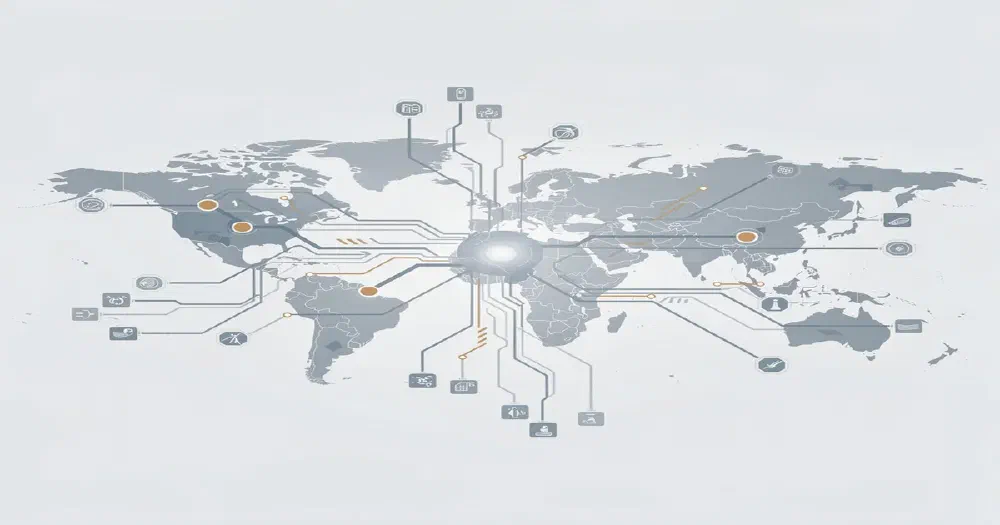
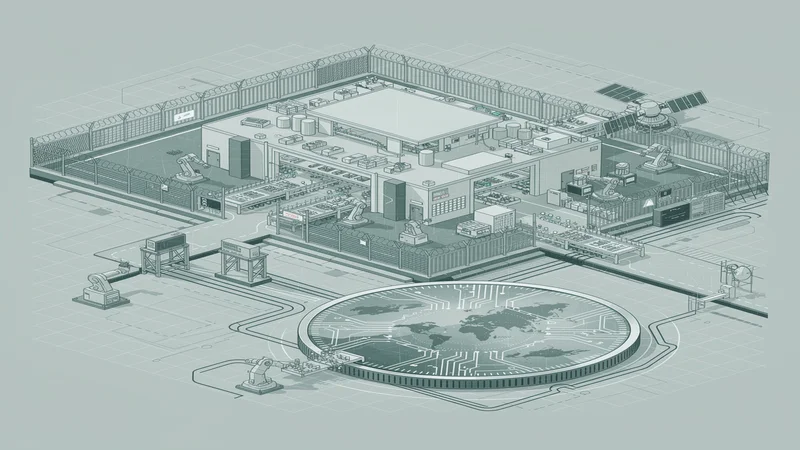
The global space supply chain is not a flat market but a network with a single dominant node. United States facilities — Microchip Technology in Chandler, BAE Systems in Manassas, Honeywell in Plymouth — concentrate the radiation-hardened semiconductor fabrication on which every modern satellite depends. The United States accounted for roughly 71 percent of global software and computer R&D spending in 2020, the most recent comparable data; Europe accounted for 7 percent . ITAR jurisdiction extends extraterritorially: any product containing US-origin content at any tier, regardless of where it is integrated, falls under the State Department’s licensing authority. NASA alone maintains a dedicated Export Control and Interagency Liaison Division administering compliance across a prime-contractor supplier network reported to span more than 13,200 suppliers in 52 countries . The control surface is bureaucratically deep and legally global.
Around this hub three other industrial geographies have organized themselves. Europe anchors launcher production in Bremen and Les Mureaux, with Airbus Defence and Space and Thales Alenia Space constituting the prime-contractor tier across France, Italy, Germany and the United Kingdom. China has built a vertically integrated space-industrial base around CASC and CASIC, executed 92 orbital launches in 2025 , and is pushing semiconductor equipment self-sufficiency from 35 percent toward a 70 percent target by 2027 . India occupies a hybrid position, deepening US integration through the TRUST partnership while preserving an indigenous program at ISRO. A fourth axis cuts across all three: China controls 98 percent of global gallium production and dominant shares of the rare earths essential to space-grade solar cells, magnets and coatings.
Complication
Into this stable architecture European primes have begun stamping the label “ITAR-free” onto launchers and satellites, framing it as sovereignty achieved. The label is a category error. It conflates three different things — assembling a satellite from non-US-procured units, sourcing every tier of the bill of materials free of US-origin content, and possessing the underlying know-how to design and fabricate that content domestically — and most claims satisfy only the first. The January 2025 MTCR reform , which loosens Category I SLV transfers to allies, simultaneously reduces the forcing function for European indigenous capability and signals that Washington still controls the dial. Counterspace threats are rising across China, Russia, Iran and North Korea, as the CSIS Space Threat Assessment 2024 catalogues. The probability of a crisis that tightens controls overnight is no longer hypothetical, and supply chain diversification still takes between five and fifteen years. What looks from inside the European industrial conversation like a procurement preference reads from a structural vantage point as a question about whether independence at each of the three tiers is achievable at all — and for whom.
The Argument
Final-assembly sovereignty is achievable and largely solved.
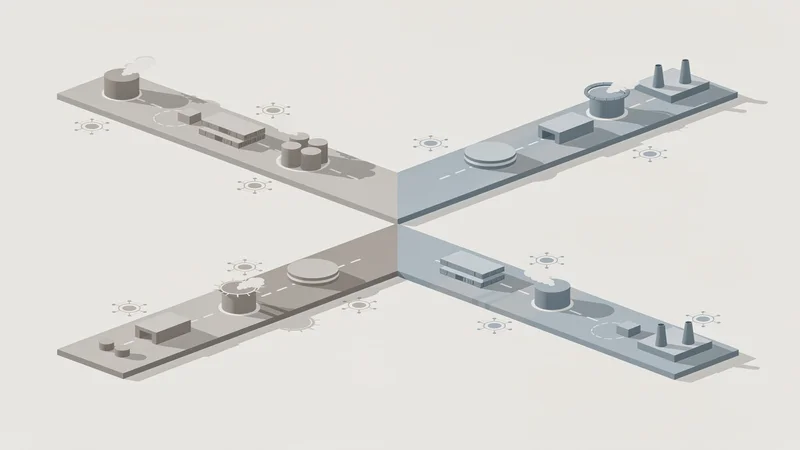
At the topmost tier — building a launcher or satellite from prime-contractor outputs that are themselves European-procured — ITAR-free is not a myth. It is operationally demonstrated. Ariane 6 production runs through MT Aerospace in Augsburg and ArianeGroup in Les Mureaux , with structural elements, propulsion subsystems and integration entirely within an intra-European supplier base. Thales Alenia Space and Airbus Defence and Space deliver flagship satellite buses on the same logic. France’s defense industry, widely assessed as the most ITAR-free in Europe though the ranking is qualitative and hard to pin down precisely , anchors this layer. ESA’s CM25 sovereign access mandate institutionalizes the political commitment.
This tier is tractable for a straightforward geographic reason. Launcher integration is the part of the space industrial stack that maps most cleanly onto continental industrial geography: large structures, propulsion, mechanical assembly, ground operations. Spykman’s Rimland framework captures Europe’s situation here — Europe has the institutional depth, the workforce, and the political coherence to assemble launchers without crossing the Atlantic for any tier-1 input. The amphibious Rimland strategy works for what it is designed to do: maintain a sovereign launcher capability while keeping transatlantic relationships intact. At this top tier, the strategic position is unambiguous:
| Lens | Position | Assessment | Key Insight |
|---|---|---|---|
| Mackinder (Heartland) | Europe as technology Rimland adjacent to US Heartland | Sufficient continental industrial mass for launcher integration | Assembly-tier sovereignty is consistent with Rimland status |
| Mahan (Sea Power) | US 5/5 across all six elements; Europe a competent secondary | Europe controls its own assembly “harbors” even within US-dominated network | The harbor is sovereign even when the sea lanes are not |
| Spykman (Rimland) | Amphibious; access to multiple supply networks | Optimal for selective assembly-tier autonomy | Sovereignty at the visible tier is the Rimland’s natural ceiling |
| Waltz (Structural) | Collective middle power with launcher depth, component-level dependency | Polarity transitional; assembly tier insulated from system pressure | System bifurcation does not yet bite the launcher level |
History points the same way, from a different angle. The China case, often cited as the model for European aspirations, actually demonstrates how easy this tier is rather than how hard: China achieved launcher-level sovereignty within roughly a decade of the 1999 Cox Report restrictions, well before the harder problems began to yield. The lesson is different: what Europe has already accomplished with Ariane 6 is the part of China’s trajectory that does not require twenty-five years of forced exclusion. The danger is rhetorical: extrapolating success at this tier into a claim about the tiers below it.
Component-tier independence is denied to all Western actors by chokepoint control.
One layer down, the picture inverts. At the level of the component bill of materials, every European prime depends, at depth, on a small number of US suppliers that have no foreign equivalent at performance parity. Nine critical categories of radiation-hardened FPGAs and processors are served by three or fewer US fabs each . Advanced chip design depends on EDA software dominated globally by Synopsys, Cadence and Siemens EDA, with no credible non-US alternative. The empirics here are unambiguous: a satellite labeled ITAR-free at the prime-contractor level routinely contains US-origin content several tiers down that the prime contractor itself cannot fully trace.
This tier is not amenable to procurement policy alone — Mahan’s framework, sharpened by economic statecraft analysis, shows why. The United States does not merely participate in the space-grade semiconductor market. It controls the network through which all space-grade technology flows. ITAR jurisdiction operates as a global naval blockade that follows the component, not the ship. The licensing system gives BIS and DDTC a panopticon view of every end-user — what Farrell and Newman call a structural chokepoint, where the dominant actor sees and gates simultaneously. EDA software, delivered under license, extends the visibility into design activity in real time. SWIFT and dollar clearing add a financial chokepoint that follows transactions the way ITAR follows components. These are mutually reinforcing leverages, not independent ones. The Trump administration bundles trade tariffs, defense cooperation, technology access and intelligence-sharing together, which makes it structurally impossible to negotiate any one of them in isolation.
This structural condition converts into a recurring crisis through a temporal asymmetry. Export controls can be tightened overnight; component-tier diversification requires between five and fifteen years. In every conflict cycle, dependent actors are caught with diversification incomplete. The historical record is consistent. CoCom, the institutional ancestor of ITAR, exhibited the same pattern across forty-five years of Soviet adaptation. Chronic enforcement gaps and third-country routing — TSMC’s chip diversion to Huawei , the documented case of 200-plus dual-use shipments routed through a single Chinese company’s California subsidiary to sanctioned Russian entities — do leak content in both directions. But the leak is never fast enough or clean enough to dissolve the underlying chokepoint for the dependent customer who still has to pass an audit. And there is now a second axis: China’s gallium export ban and dominant rare earth position create what is best described as a “reverse ITAR” — a satellite with zero US-origin content still faces a Chinese chokepoint on the inputs to its solar cells. European raw material policy, in the formal assessment of the economic statecraft literature, “does not yet amount to a full-fledged strategy of economic statecraft.” The component tier is doubly captured.
The middle tier is not a frontier on which European industrial policy is making slow, steady progress. Progress there is gated by the network’s structural geography, and depends on a parallel investment of an entirely different order. Ariane 6 built the harbor. The rad-hard FPGA market is the open sea. Europe holds the harbor, not the sea.
Know-how parity demands a parallel Heartland only forced exclusion has built.
At the deepest tier — possessing the design know-how, fabrication processes, and institutional R&D base from which space-grade components can be regenerated domestically without external inputs — only one non-US actor in the contemporary system qualifies. China qualifies, and only China. The path it took is instructive because it is unrepeatable under current European conditions.
Mackinder’s framework, translated to technology network topology, identifies the US semiconductor and defense-electronics cluster as the Heartland of the space industrial World-Island. Genuine independence requires not diversifying supply lines but constructing a parallel Heartland. China did exactly that. The Cox Report in 1999 and the Wolf Amendment in 2011 enforced near-total exclusion. Over twenty-five years China rebuilt the space supply chain from scratch: BeiDou, Tiangong, the Chang’e lunar program, megaconstellations, 92 orbital launches in 2025, and semiconductor equipment self-sufficiency accelerating toward a 70 percent target by 2027 under intensified sanctions . It is on track for most of the 2021 strategy goals by the same year. The cost was real — persistent gaps in optics, composites and the cutting-edge process nodes — and the budget was substantial: roughly $20 billion annually against US space spending of $80 billion. But the operational independence is now structural.
A paradox sits underneath this trajectory: sustained over decades, export controls accelerate the capability they aim to deny — the sanctions paradox in its purest form. An American Affairs Journal analysis described the semiconductor case as “the largest unforced technology transfer in history.” The mechanism is clean: total denial removes the cheaper option — continued dependency — which normally wins funding contests against indigenous development under ordinary political conditions. China was, in effect, given no choice. That is the forcing function, and it is what European ITAR-free programs lack. MTCR reform loosens access. Alliance relationships preserve licensed routes. The “kill switch” fear is sharp enough to motivate political rhetoric but not yet sharp enough to fund a parallel Heartland on the scale and time horizon the China case proves to be required.
There is an obvious misreading to guard against here. Citing China’s success to argue that “Europe can do it too” overlooks four decisive structural differences: compulsion versus choice, centralized command-economy resource allocation versus 27-member coordination, total replacement versus selective replacement, and operating outside the alliance system versus operating inside it. There is no historical precedent for selective know-how independence within an alliance relationship. CoCom and the China case are both binary — full denial producing full eventual self-sufficiency. The hybrid Europe is attempting is historically novel and untested. At the system level, Waltz’s structural theory suggests it sits on the wrong side of the pressure: as the system bifurcates into US-allied and Chinese supply chain blocs, Rimland actors face mounting pressure to choose. The room for amphibious flexibility narrows. India’s position deserves a brief note. Its hedging strategy — TRUST plus indigenous programs — is the textbook Rimland response in a transitional system. But it inherits the same structural ceiling: deepening US integration creates new dependencies even as indigenous programs build insurance, and the two trajectories may not converge before the next crisis tests them both.
The know-how tier, in short, is attainable in principle — China proved it — but not under voluntary, alliance-internal, multi-state conditions. It has been attained once, by an actor that paid in compulsion, time, money and competitiveness. The conditions of that payment are absent from the European case, and the empirical record offers no second model.
Implications
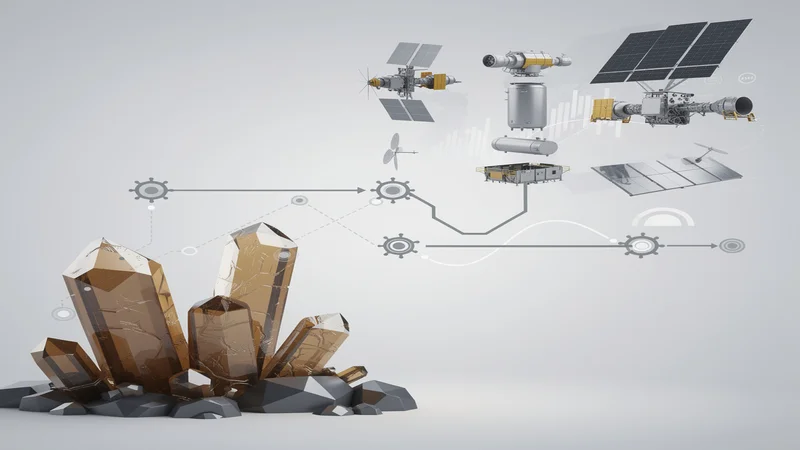
This three-tier breakdown forces a reframing of what “ITAR-free” should mean as an industrial and strategic objective — distinguishing what each stakeholder should do at each tier, and what they should watch as the system bifurcates.
For European space agencies and primes, the priority is to retire the ITAR-free label as a sovereignty claim and replace it with the more accurate framing of managed dependency with selective indigenous capability. The Ariane 6 success at the assembly tier should not be extrapolated to the component tier — the operational and rhetorical risks of doing so are asymmetric, because the next crisis will expose the gap publicly. Investment should target the specific chokepoints where dependency is deepest and substitution is most credible: rad-hard FPGAs in the radiation-tolerance categories where ESA’s AGGA-4 chip program has demonstrated the model, advanced composites, precision optics. ESA and Europe’s major national agencies should treat the longer 15-to-20-year horizon for full component-tier substitution — a stricter bar than the diversification lag cited above — as the actual planning baseline, not as a worst case. And raw material strategy — gallium, rare earths, magnesium — must be integrated into the same plan, because a satellite free of US components but dependent on Chinese inputs has merely shifted its chokepoint, not removed it.
For the United States, the sanctions paradox should discipline export-control calibration. The historical record demonstrates that blanket denial accelerates adversary self-sufficiency over decades. The MTCR reform of January 2025 is the right kind of move: case-by-case review for allies preserves leverage without driving allied defection. But further loosening within the alliance risks dissolving the very leverage that maintains the alignment in the first place. Equally important, the domestic rad-hard supply chain’s own concentration in three or fewer firms across nine critical categories is a mirror-image vulnerability. The hegemonic position cannot be sustained credibly on a fragile domestic base, and remediation here is a prerequisite for everything else.
For China, the strategic priority is narrowing residual competitiveness gaps in optics, composites and cutting-edge process nodes while leveraging the reverse-ITAR position as durable counter-leverage. The 92-launch cadence in 2025 demonstrates operational sufficiency. Closing the qualitative gap is the next decade’s project, and the gallium and rare earth chokepoints provide the negotiating capital to buy time. For India, the hedging architecture is structurally optimal for a Rimland power in a transitional system, and TRUST is correctly conceived. The risk worth monitoring is the one Europe is now learning first-hand: deeper US integration brings dependencies of its own, and those can narrow India’s future room to maneuver. The European ITAR-free experience over the next five years is the leading indicator to watch.
For all four actors, the indicators worth tracking are concrete. Watch the Chinese semiconductor self-sufficiency trajectory toward the 70 percent target by 2027. Watch whether MTCR reform is followed by additional allied loosening or by re-tightening at the next crisis. Watch European rad-hard substitution programs for evidence of multi-year funding stability rather than rhetorical commitment. Watch the gallium export ban for either escalation or reversal. The system is mid-bifurcation; these are the gauges that show which way it tips.
Limitations
Several caveats discipline the argument above. The classical geopolitical theories were designed for territorial control and maritime geography. Their application to network topology is analogical, and it introduces interpretive uncertainty: chokepoints in software and licensing networks do not behave identically to physical straits. Tier-3 and tier-4 supply chain composition is opaque by nature, and the actual depth of US-origin content in nominally ITAR-free European satellites is unknown in open sources. Chinese rad-hard performance data is not independently benchmarkable. The analysis assumes the current US trajectory of bundled trade-defense-technology leverage continues; a reversion toward compartmentalized policy would soften European ITAR-free urgency. It also assumes Chinese raw material export controls remain in place; their lifting would dissolve the reverse-ITAR axis. Finally, this analysis does not address cyber vulnerabilities in supply chains, the disruptive role of private actors such as SpaceX in restructuring the supplier base, or the possibility that quantum computing or AI-driven chip design alters the component-level chokepoint landscape in ways the structural reading cannot anticipate. The Key Insight would need revisiting if any of these alters the geometry of the three tiers themselves.
Primary Sources & Research
NASA Office of International and Interagency Relations (2025). Export Control and Interagency Liaison Division. NASA. https://nasa.gov/oiir/export-control
NASA (2025). FY 2026 Budget Technical Supplement. NASA. https://nasa.gov/wp-content/uploads/2025/05/fy-2026-budget-technical-supplement-002.pdf
European Space Agency (2025). CM25: Securing Access to Space. ESA. https://www.esa.int/ESA_Multimedia/Images/2025/11/CM25_Securing_access_to_space
European Space Agency (2025). AGGA-4 GNSS Receiver Chip. ESA. http://www.esa.int/ESA_Multimedia/Images/2025/08/AGGA-4_Chip
NASA Glenn Research Center (n.d.). Silicon Carbide Electronics and Sensors. NASA Glenn. https://www.nasa.gov/glenn/research/silicon-carbide-electronics-sensors/
DLR (2025). Space Research and Transfer. DLR. https://www.dlr.de/en/research-and-transfer/space
ArianeGroup (2025). ArianeGroup and MT Aerospace AG Sign Major Ariane 6 Supplier Contract. ArianeGroup Press. https://press.ariane.group/arianegroup-and-mt-aerospace-ag-sign-major-ariane-6-supplier-contract
CSIS — Sean Wilson (2025). Missile Technology Control Regime Reform: Key Changes and Next Steps. Center for Strategic and International Studies. https://csis.org/analysis/missile-technology-control-regime-reform-key-changes-and-next-steps
CSIS — Benson, Bergmann, Steinberg (2025). Transatlantic Tech Clash: Will Europe De-Risk from the United States?. Center for Strategic and International Studies. https://csis.org/analysis/transatlantic-tech-clash-will-europe-de-risk-united-states
CSIS Aerospace Security Project (2024). Space Threat Assessment 2024. Center for Strategic and International Studies. https://csis.org/analysis/space-threat-assessment-2024
Carnegie Endowment for International Peace — Balfour, Baroncelli, Bomassi, Csernatoni et al. (2024). Geopolitics and Economic Statecraft in the European Union. Carnegie Europe. https://carnegieendowment.org/research/2024/11/geopolitics-and-economic-statecraft-in-the-european-union?lang=en
CSET — Georgetown (2025). China’s Space Progress Report. Center for Security and Emerging Technology. https://cset.georgetown.edu/article/chinas-space-progress-report/
US-China Economic and Security Review Commission (2025). China’s Space Progress and Civil-Military Fusion. USCC. https://www.uscc.gov/annual-report/2025-annual-report-congress