
 spacestrategies.org

Key Findings
- 600+ commercial space firms compete for contracts from a single monopsonic state buyer (China SatNet/Guowang), with consolidation to a handful of significant players likely by the early 2030s following the shipbuilding precedent (RMB 550B subsidies, 18% gross margins, painful winnowing).
- Zhuque-3 reusable-mode payload of 18,300 kg places Chinese launch capability at roughly 75-85% of Falcon 9 performance, with a reported 20-40% price advantage in non-aligned markets – yet the export ceiling is set by buyer trust, not technical capacity.
- 18.6 billion yuan in financing in 2025 alone (up 32% year-on-year) masks state direction: government guidance funds show only 26% meeting target capitalization and one-third making any investment.
- Supply chain bifurcation accelerating: U.S. semiconductor export controls constrain Chinese satellite sophistication, while China’s rare earth dominance provides retaliatory leverage – a mutual hostage dynamic.
- Guowang’s 13,000-satellite constellation creates a demand floor requiring 3,600 satellites/year by 2028, but unproven deployment scale concentrates systemic risk on a single state program.
Executive Summary
This analysis examines the Chinese commercial space sector’s competitive structure – specifically whether the state-industry symbiosis that sustains it produces a structural ceiling on third-party export competitiveness distinct from U.S., European, and Japanese models. The industry’s defining condition is a state that simultaneously functions as anchor customer, regulator, competitor, and indirect equity holder – a fusion of roles that is institutionally separated in every comparable space power. The central strategic finding is that this architecture guarantees domestic viability while imposing an export competitiveness ceiling set not by any technical limitation but by the trust deficit that role fusion inherently creates.
The Industry
Every major space power subsidises its launch and satellite industry through state demand. The question that matters is not whether China’s commercial space sector is “really” commercial, but whether the specific structure of Chinese state-industry symbiosis produces a different competitive outcome than models where these roles are deliberately separated.
Context and Industry Definition
The scope of this assessment covers Chinese commercial launch services, satellite manufacturing, and constellation operations – including state-owned enterprises (CASC and CASIC) where they interact with or compete against nominally private firms. The analysis excludes pure downstream analytics and ground-segment-only firms, focusing on the hardware-intensive upstream segments where dual-use concerns and export controls exert the strongest structural pressure.
The time horizon is 2024-2030, anchored to the Guowang deployment schedule as the sector’s primary demand clock. Comparator models – the U.S. anchor tenancy approach, European juste retour, and Japan’s JAXA-sustainer framework – are included for structural benchmarking. The key segments are commercial launch (small-lift through reusable medium-lift), LEO constellation manufacturing, and export launch services.
The Competitive Landscape
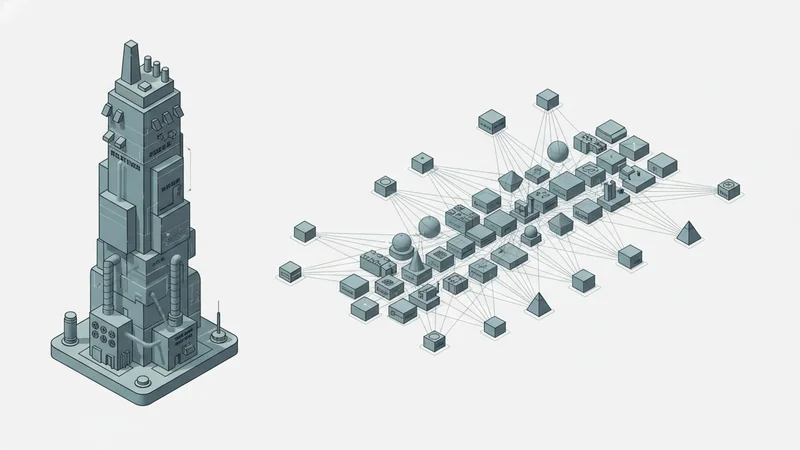
The Chinese commercial space sector’s competitive dynamics are shaped by one overwhelming force: the state’s near-absolute buyer power. China SatNet, the state entity operating the Guowang constellation , is the single largest customer for commercial launch and satellite manufacturing. Through CASC and CASIC procurement offices, the state controls the dominant share of revenue for most private firms. This monopsonic structure is the sector’s defining condition – and the structural feature that most sharply distinguishes it from every comparator model.
In the United States, the Department of Defense operates as an anchor customer but deliberately separates its buyer role from regulatory oversight and equity participation. SpaceX can leverage Starlink revenue – an independent commercial stream serving millions of direct subscribers – to reduce dependence on government contracts. This role separation is not incidental; it is a design feature that the original COTS/CRS program embedded as a condition for success: the government would not compete with industry, and it would make irreversible commitments through billion-dollar contracts . China’s Guowang provides the irreversible commitment, but CASC and CASIC’s simultaneous roles as competitors to the very firms they procure from violates the non-competition condition. European juste retour, meanwhile, distributes manufacturing politically across thirteen member states rather than efficiently – a model that ESA’s own Launcher Challenge programme implicitly concedes has failed to produce competitive services.
The resulting rivalry among Chinese firms is intense but structurally distorted. More than 600 companies chase contracts whose terms are set by a buyer that also competes against them. Private firms jockey not for market share in an open marketplace but for state-sanctioned position within a policy-coordinated ecosystem. LandSpace – whose Zhuque-2 became the first methane-fuelled rocket to reach orbit in 2023 – and Galactic Energy, with its rapid-cadence Ceres-1 small-lift vehicle, lead a field where differentiation is thin at the small-lift end and capital requirements are rising sharply at the medium-lift frontier. The case of Orienspace is illustrative: even when a private firm provides the rocket for a sea-launch mission, PLA personnel retain operational control of the launch itself . Commercial autonomy extends to the factory gate but not to the pad.
Entry barriers are transitioning. The 2014 and 2019 State Council directives that opened commercial space to private capital triggered the 600+ firm wave. But the competitive frontier has shifted from expendable small-lift rockets to reusable medium-lift vehicles capable of servicing Guowang-scale deployment. LandSpace’s Zhuque-3 – targeting 18,300 kg to LEO in reusable mode – sets a performance benchmark that most of the field cannot match . Five or more IPOs are in the pipeline, with LandSpace targeting a USD 1 billion valuation; firms that successfully list gain access to public capital and credibility, while those that fail face capital starvation.
Substitution threats are structurally low. Guowang is a sovereign mandate – China will not use foreign launch services for its national constellation regardless of price. In export markets, the dynamic inverts: countries choosing Chinese launch do so precisely because Western alternatives are inaccessible under ITAR restrictions or prohibitively expensive. ITAR has “almost entirely barred” Chinese providers such as CAS Space from U.S. and European markets , confining the addressable market to non-aligned countries. The indirect substitution risk is temporal – if SpaceX’s Starlink achieves global broadband coverage before Guowang deploys, the commercial rationale for third-country Guowang partnerships weakens.
Supplier power adds a uniquely Chinese dimension. The PLA controls launch infrastructure – a structural chokepoint with no parallel in Western models and no commercial workaround. CASC subsidiaries dominate critical component supply (engines, avionics) while simultaneously competing with their customers. And U.S. semiconductor export controls constrain access to advanced radiation-hardened chips, creating a satellite sophistication ceiling that domestic alternatives have not yet closed.
The investment landscape reinforces this picture. The 2025 financing figure of 18.6 billion yuan (up 32% year-on-year) overstates genuine market-driven deployment. Data on government guidance funds reveals that of more than 1,800 funds with a target capitalisation of USD 1.52 trillion, only 26% met targets and only one-third made any investment . Foreign institutional capital is nearly absent – not as a temporary condition but as a structural feature reflecting MCF opacity and dual-use regulatory risk. The sector’s capital base is overwhelmingly domestic and substantially state-influenced, reinforcing the monopsonic buyer dynamic rather than counterbalancing it.
Five Forces Summary
| Force | Intensity | Key Driver | Trend |
|---|---|---|---|
| Competitive Rivalry | High | 600+ firms chasing concentrated state demand | Increasing short-term; consolidation medium-term |
| Threat of New Entrants | Medium | Rising tech barriers (reuse) offset by local gov incentives | Decreasing |
| Threat of Substitutes | Low | Sovereign mandate insulates from substitution | Stable |
| Supplier Power | Medium | Military infrastructure control; CASC component dominance | Stable |
| Buyer Power | Very High | State as monopsonic anchor buyer with fused roles | Stable |
Overall Industry Attractiveness: Moderate (domestically) / Unattractive (for export competitiveness)
The Value Dynamics
The competitive forces acting on Chinese commercial space are severe, but they describe only the external pressure. The internal question is equally consequential: where does value actually accumulate in this ecosystem, and who captures it?
Where Value Lives
Value creation in Chinese commercial space is concentrated in two activities: launch vehicle manufacturing (operations) and constellation assembly at scale (integration). LandSpace’s methane engine programme and Galactic Energy’s rapid-cadence production represent genuine technical achievement. But value capture tells a different story. SatNet, as monopsonic buyer for Guowang, sets contract terms that compress launch and satellite manufacturing margins – replicating the dynamic that produced 18% gross returns in Chinese shipbuilding despite massive output volumes.
The value chain’s most significant structural feature is the gap between where value is created and where it is captured. Private commercial firms are concentrated in upstream hardware – the segment where margins are thinnest and state buyer power highest. Downstream services (constellation operations, broadband delivery, BeiDou-linked applications) sit with state-owned or state-linked entities. No Chinese commercial space firm possesses an independent revenue stream equivalent to SpaceX’s Starlink, which means none can accumulate the financial leverage needed to control value chain chokepoints.
Three chokepoints define the sector’s economics. First, Guowang contract allocation: SatNet’s decisions on which firms receive manufacturing and launch orders will determine survival. Second, launch infrastructure access under PLA scheduling control. Third, export market access, where U.S. diplomatic and regulatory pressure determines which countries can purchase Chinese services. Private commercial firms control none of these chokepoints.
The supply chain adds a geopolitical layer. China’s dominance in rare earth elements provides retaliatory leverage against Western semiconductor restrictions – creating a mutual hostage dynamic rather than one-sided vulnerability. But the escalation feedback loop is accelerating bifurcation: each round of restrictions reinforces the emergence of two parallel space industrial bases with diminishing cross-compatibility , increasing costs on both sides.
Competitive Position
The dual-lens assessment – competitive forces and value chain position – converges on a coherent picture. Chinese commercial space firms are structurally disadvantaged against the external forces (dominated by state buyer power) and within the value chain (excluded from controlling logistics, downstream services, or export access). Their strength lies in technology development and manufacturing scale – but these strengths generate value that is disproportionately captured by the state apparatus.
This is the architecture’s central paradox. The state-industry symbiosis that guarantees domestic demand simultaneously prevents the accumulation of commercial autonomy. The Chinese business model has internal coherence within the domestic market: state demand creates a floor, state coordination allocates resources, state infrastructure provides the operating environment. But it has a structural incoherence for export competitiveness: the same role fusion that guarantees domestic demand creates the trust deficit that limits export markets. This is not a correctable policy failing – it is an architectural feature.
The disruption potential compounds the paradox. Chinese commercial space is not a classic low-end disruption: vehicles are approaching Falcon 9 class, not starting inferior and working upward. It is better characterised as a geopolitically constrained cost disruption – technically approaching parity, with reported price advantages of 20-40% in non-aligned markets (Gulf states, Southeast Asia, Africa, Latin America) – but confined by trust barriers that do not improve with technical iteration. The most potent disruption mechanism is not technology convergence but industrial overcapacity: if 600+ firms produce surplus capacity that Guowang cannot absorb, the state has both the incentive and the mechanism to direct that surplus toward export markets at subsidised prices. This is the EV and shipbuilding playbook applied to space hardware.

The Outlook
The structural analysis points to a sector at an inflection. The current fragmentation is unsustainable; the consolidation path is legible; the export ceiling is architectural. What remains uncertain is timing, sequence, and whether any exogenous shock alters the trajectory.
Strategic Implications
Industry positioning. For Chinese commercial firms, the rational strategy is to secure Guowang contracts as a survival floor while cultivating export relationships with non-aligned buyers for margin enhancement. LandSpace’s IPO outcome will be the sector’s valuation Rubicon: success at or near the USD 1 billion target validates genuine commercial viability; a significant discount signals that public markets cannot price these firms independently of state direction. For Western incumbents, the threat is not head-to-head competition in allied markets but price erosion in non-aligned ones that shrinks their global addressable market. CSIS analysts have observed that China’s ability to capture international market share is “limited only by other countries’ willingness to buy Chinese goods and services – a U.S. taboo that is not embraced worldwide.”
Value chain focus. Value is migrating from launch services (commoditising as reuse spreads globally) toward constellation operations and downstream applications. Chinese private firms trapped in upstream hardware face a structural bind: the downstream segments where margins are richer are occupied by state entities. The strategic opportunity – vertical integration into services – is foreclosed by the same state architecture that sustains the firms. This is the inverse of SpaceX’s trajectory, where vertical integration into Starlink created the independent revenue base that transformed the company’s competitive position.
Vulnerability map. Arianespace is the most structurally exposed Western incumbent: squeezed by SpaceX on cost and performance from above, and by Chinese providers on price in non-aligned markets from below, without a sovereign constellation to anchor demand. The European Launcher Challenge acknowledges this vulnerability but has not yet produced results. SpaceX faces no direct competitive threat from Chinese providers but competes for geopolitical influence in non-aligned markets.
What to monitor. Five indicators will signal structural shifts: (1) Zhuque-3 booster reuse achievement, targeted for Q4 2026 – the threshold event for Chinese cost competitiveness. (2) Guowang deployment pace against the 3,600 satellites/year 2028 target – the demand clock for the entire sector. (3) LandSpace IPO pricing – the commercial viability signal. (4) Any Gulf state or major non-aligned buyer signing a Chinese launch or satellite contract at scale – the trust barrier breach that could trigger a domino effect. (5) Further rounds of semiconductor export controls or rare earth counter-restrictions – the supply chain bifurcation accelerator. The U.S. State Department has already circulated internal talking points urging allies to avoid “untrusted suppliers” such as Chinese satellite firms , and U.S. Space Force officials have publicly framed China’s reusable rocket development as a “space security concern” – securitization language that converts commercial competition into geopolitical alignment pressure for allied nations.
Limitations
This analysis captures the sector at a pre-consolidation, pre-reuse inflection point. The competitive force configuration will shift materially if Zhuque-3 achieves routine reuse or if Guowang deployment falls significantly behind schedule. Financial data reliability is constrained: the 18.6 billion yuan financing figure may include state-directed capital counted as commercial investment, and the 20-40% export price discount rests on a single source with no primary data. The definition of “commercial” in the Chinese context is itself contested – this assessment treats organisational form (non-state-owned enterprise) as the boundary while acknowledging that functional independence is limited. The U.S.-China Economic and Security Review Commission characterises the entire sector as a “state-directed commercial ecosystem” with “companies that look private but follow government priorities” , and Chinese military researchers from the National University of Defence Technology have publicly urged building “dual-use satellite application systems” – evidence that the boundary between commercial and military purpose is contested from within as well as without. If a major allied nation defects from U.S. technology alignment to adopt Chinese space services at scale, the export ceiling analysis would require fundamental revision.


Primary Sources & Research
NASA Office of Technology, Policy, and Strategy (2024). Enabling America on the Space Frontier: The Evolution of NASA’s Commercial Space Development Toolkit. NASA. https://www.nasa.gov/wp-content/uploads/2024/12/nasa-enabling-america-on-the-space-frontier-december-16-final-tagged.pdf
ESA (2024). Ariane 6: Who Makes What (Infographic). European Space Agency. https://www.esa.int/ESA_Multimedia/Images/2024/06/Ariane_6_who_makes_what_infographic
ESA (2025). European Launcher Challenge Timeline. European Space Agency. https://www.esa.int/ESA_Multimedia/Images/2025/11/European_Launcher_Challenge_timeline
JAXA (2025). Space Strategy Fund: Program Overview. Japan Aerospace Exploration Agency. https://fund.jaxa.jp/content/uploads/Overview_of_The_SpaceStrategy_Fund.pdf
CSIS Aerospace Security Project (2025). The Commercial Space Imperative. Center for Strategic and International Studies. https://csis.org/analysis/commercial-space-imperative
CSIS Aerospace Security Project (2025). Engaging China in Space: Eyes Wide Open. Center for Strategic and International Studies. https://csis.org/analysis/engaging-china-space-eyes-wide-open
CSIS Economics Program (2025). The Hidden Risk of Rising U.S.-PRC Tensions: Export Control Symbiosis. Center for Strategic and International Studies. https://csis.org/analysis/hidden-risk-rising-us-prc-tensions-export-control-symbiosis
CSIS Economics Program (2025). Wins and Losses: Chinese Industrial Policy’s Uneven Success. Center for Strategic and International Studies. https://csis.org/analysis/wins-and-losses-chinese-industrial-policys-uneven-success
Swope, Clayton (2024). The Pitfalls of Labeling Whole Space Missions as Inherently Governmental. Center for Strategic and International Studies. https://www.csis.org/analysis/pitfalls-labeling-whole-space-missions-inherently-governmental
Taylor, Monique (2025). China’s Space Ambitions and the Commercial Space Race. East Asia Forum, University of Helsinki. https://eastasiaforum.org/2025/02/15/chinas-space-ambitions-and-the-commercial-space-race/
Watanabe, Mariko (2025). Industrial Policy and China’s Commercial Space Sector. East Asia Forum, Gakushuin University. https://eastasiaforum.org/2025/03/10/industrial-policy-and-chinas-commercial-space-sector/
Barwick, Panle Jia; Kalouptsidi, Myrto; Zahur, Nahim Bin (2019). China’s Industrial Policy: An Empirical Evaluation. National Bureau of Economic Research. https://www.nber.org/papers/w26075
Wei, Yifan; Ang, Yuen Yuen; Jia, Nan (2023). The Promise and Pitfalls of Government Guidance Funds in China. The China Quarterly. https://www.cambridge.org/core/journals/china-quarterly/article/promise-and-pitfalls-of-government-guidance-funds-in-china/9211F2954E797A29E82B540DA6D9A714
Cao, Cong et al. (2020). Returning Scientists and the Emergence of China’s Science System. Science and Public Policy. https://doi.org/10.1093/scipol/scz056